

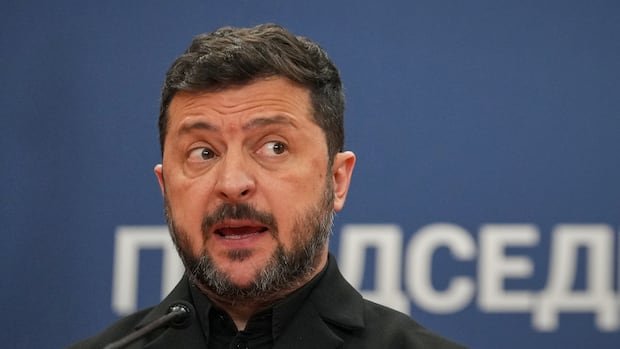

President Volodymyr Zelenskyy warned that holding an election in Ukraine during the ongoing conflict with Russia would be detrimental, potentially dividing the country. His remarks, conveyed to the press on Sunday, marked his first response to former defense minister Mykhailo Fedorov’s recent call for a wartime poll.
Fedorov’s sudden removal last month sparked widespread protests, with some supporters initially backing his reinstatement before hesitating over his election proposal, a first from a major Ukrainian political figure since Russia’s full-scale invasion in 2022.
Zelenskyy emphasized that conducting elections during wartime is against Ukrainian law. Additionally, security challenges and the presence of millions of Ukrainians abroad, either under Russian control or involved in frontline combat, would pose significant obstacles to holding a fair election.
Expressing concern, Zelenskyy stated that pushing for elections amid the conflict could risk further dividing the nation. Despite his consistent approval rating of around 60 percent, recent polls indicate that most Ukrainians prefer postponing elections until after the cessation of hostilities.
Zelenskyy mentioned the possibility of a wartime election if international partners could ensure security, but clarified that no such proposal had been presented. He underlined the importance of focusing on ending the war and safeguarding Ukraine’s independence.
Addressing his strained relationship with Fedorov, Zelenskyy acknowledged their past collaboration but noted differences in their current directions. While Fedorov did not confirm his candidacy in any future election, his dismissal last month, following disagreements with top military officials, raised questions about political dynamics within Ukraine.
In a broader discussion, Zelenskyy recounted a misunderstanding involving defense spending decisions that led to a contentious exchange with former U.S. President Donald Trump regarding the use of Starlink technology in Russia. Zelenskyy detailed how inaccurate information from the Defense Ministry played a role in the incident, which ultimately strained relations and highlighted the need for accurate communication in international dealings.