

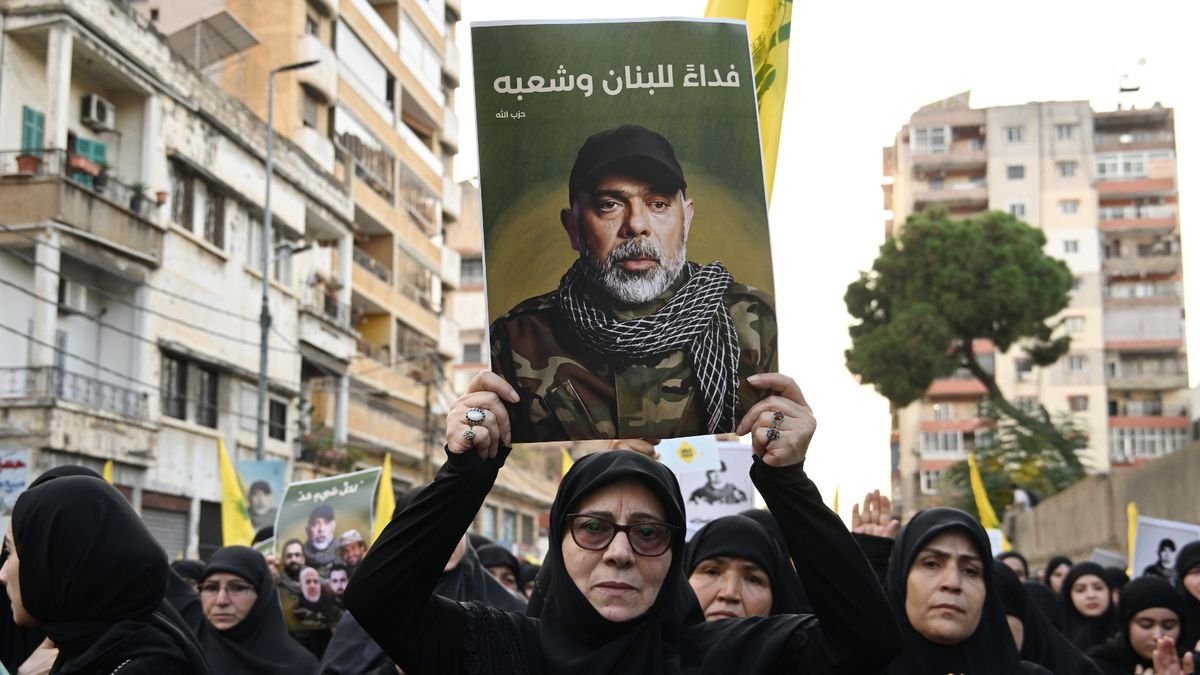

At least four additional Palestinians lost their lives in Gaza amid concerns of potential retaliatory strikes by Hezbollah following an airstrike in Beirut over the weekend. Hezbollah leaders are contemplating a response after the killing of their chief of staff and veteran fighter, Haytham Tabtabai, in the southern part of the capital on Sunday.
Israel justified the attack, referring to Tabtabai as the “master of murders,” citing his long-standing affiliation with Hezbollah and involvement in re-arming the network. Reports suggest that Hezbollah’s Iranian backers have provided substantial supplies, amounting to at least £1 billion, to the group.
The airstrike marked the first on Lebanon’s capital since June and resulted in the deaths of five individuals, with at least 25 others sustaining injuries. Hezbollah acknowledged Tabtabai’s death and issued a warning of potential escalation of attacks shortly before the scheduled visit of Pope Leo XIV to Lebanon.
Israeli Defense Minister Israel Katz affirmed, “We will continue to take strong measures to safeguard the residents of the north and the state of Israel.” Senior Hezbollah official Mahmoud Qmati condemned Israel’s strike as crossing a “red line,” indicating the group’s leadership was deliberating on a potential response.
The ongoing conflict in Gaza has now claimed over 70,000 lives and left 170,863 individuals wounded since its outbreak in October 2023. The conflict initiated with Hamas’s aggression towards southern Israel, resulting in casualties and abductions. Meanwhile, a significant number of Hamas fighters remain entrenched in tunnels beneath Rafah in the Strip.
Recent Israeli airstrikes over southern Lebanon have intensified, coinciding with pressure from Israel and the United States on Lebanon to disarm Hezbollah, accusing the group of rebuilding its military capabilities. The Lebanese government, backing the disarmament of Hezbollah, has refuted these allegations.
Lebanon has deployed troops to the south but expressed the need for additional resources due to financial constraints. Hezbollah has refrained from attacking Israel since the ceasefire began, except for minor incidents. The group’s previous rocket firings near an Israeli military base were labeled as a “warning.”
Tabtabai was presumed to be the successor of Ibrahim Aqil, whose demise in September 2024, alongside other key Hezbollah figures, significantly impacted the organization. Mahmoud Qamati of Hezbollah’s political council hinted at a potential retaliation following the strike on Sunday.
Lebanon’s President Joseph Aoun accused Israel of failing to comply with the ceasefire terms and urged international intervention to halt further attacks on Lebanon. The president expressed readiness for negotiations with Israel to cease airstrikes and reiterated Lebanon’s commitment to disarming all non-state entities, including Hezbollah.
The latest conflict between Israel and Hezbollah commenced in October 2023, triggered by Hamas’s attack on Israel, followed by Hezbollah’s rocket launches in solidarity. Israel’s extensive offensive in Lebanon last year substantially weakened Hezbollah, leading to a ground invasion. This conflict adds to a series of past confrontations involving Hezbollah over the years.
Meanwhile, the Israeli army’s chief of staff, Lt. Gen. Eyal Zamir, took disciplinary action against 13 military officials, including top commanders, for their roles in the October 2023 events. The commanders faced sanctions, retirements, or resignations due to failures in protecting Israelis during the attacks, emphasizing the importance of command responsibility standards.