

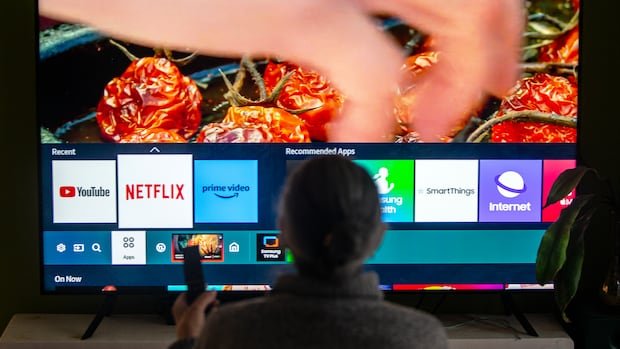

Dozens of Canadian cultural sector organizations are urging Prime Minister Mark Carney to reconsider eliminating the requirement for foreign streaming companies like Netflix to contribute financially to Canadian content. The government’s plan to replace the 15% tax on large streamers’ Canadian revenue with direct government funding has raised concerns among these groups.
In a joint letter signed by 50 organizations, including the Canadian Media Producers Association and unions representing Canadian actors, writers, and directors, it is emphasized that the government’s proposed annual funding, while appreciated, is not a sufficient substitute for a regulated contribution regime enforced by the CRTC. The letter highlights that discretionary funding is subject to budgetary changes and external pressures, unlike a regulated contribution framework that provides stability.
Following the Canadian Radio-television and Telecommunications Commission’s decision to increase contributions for large streaming services, the government announced its intention to replace the financial contribution requirement with direct annual funding. However, this move has sparked uncertainty in the production sector, as noted in the letter addressed to both Prime Minister Carney and Culture Minister Marc Miller.
The signatories stress the importance of maintaining the 15% contribution requirement as a fair benchmark for the regulatory framework. While the government’s shift in policy regarding streaming rules was influenced by trade concerns raised by the United States, the U.S. trade representative has indicated that Canada may not receive full recognition for this decision.
The cultural sector organizations are advocating for a stable and legally enforceable contribution obligation from foreign streaming companies to support Canadian content, emphasizing the need for a reliable framework that safeguards the country’s cultural industry.