

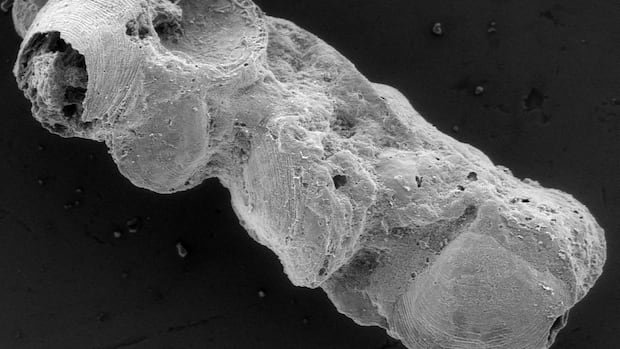

Long before the era of dinosaurs, a surge in biodiversity led to the emergence of early ancestors of present-day animals and a rise in excrement. A recent study sheds light on the significance of examining coprolites, or fossilized feces, in gaining insights into Earth’s early ecosystems, nutrient cycles, and animal interactions.
The study, featured in the journal Trends in Evolution & Ecology, delved into the analysis of fecal fossils dating back to the Cambrian period, around 540 million years ago. By studying fecal remains from primitive worms, invertebrates, and mollusk-like creatures, researchers discovered that fecal matter played a crucial role in enhancing the habitability of deep water ecosystems and making nutrients more accessible during that era, long before the time of dinosaurs.
The abundance of feces during the Cambrian period, as revealed by the study, holds key implications for understanding the origins of present-day marine ecosystems. This finding underscores the vital role that fecal matter played in sustaining modern marine ecosystems, highlighting the importance of comprehending the driving forces behind both past and current ecosystems and their evolution.
The research conducted by Julien Kimmig and Russell Bicknell involved the examination of numerous coprolites from 37 different deposits worldwide. These coprolites originated from various burrowing worms, arthropods, brachiopods, and hyoliths, with the size ranging from microscopic in the early Cambrian to nearly the size of rabbit droppings after 15 million years. The coprolites eventually became visible to the naked eye and contained remnants of shells or worms.
Besides offering insights into evolution and predator-prey relationships, the study of coprolites aids in unraveling Earth’s ecology and the reasons behind the significant ecological transformations brought about by the Cambrian Radiation. This period marked a rapid appearance of modern animal groups in the fossil record, commonly known as the Cambrian Explosion.
In essence, the study highlights the pivotal role of coprolites in advancing our understanding of ancient ecosystems and their functioning, shedding light on the intricate interplay between organisms, nutrient cycles, and energy flow. By studying coprolites, researchers can gain valuable insights into the past environments and potentially predict future ecological scenarios, underscoring the relevance of paleontological research in shaping our understanding of modern and forthcoming ecosystems.
In the realm of paleontology, the study of coprolites during the Cambrian period enriches our comprehension of one of the most captivating events in Earth’s history. The Cambrian Radiation, occurring approximately 520 to 540 million years ago, marked the emergence of relatives to modern animals, such as shrimp and marine mollusks, leading to the establishment of the diverse array of species seen today.
By examining fecal remains from the Cambrian era, scientists can glean valuable information about nutrient cycles, energy flow, and their impacts on biological diversity, offering a comprehensive view of ancient ecosystems and geological periods. This holistic approach not only enhances our understanding of past environments but also equips us to anticipate and model future ecological changes.
For many paleontologists, coprolites have become a pivotal focus of their research endeavors. The study of fossilized feces provides unique insights into ancient ecosystems, shedding light on the interactions between organisms and their environment. By delving into coprolites, researchers can uncover hidden facets of ancient life, offering glimpses into dietary habits, ecological relationships, and carbon cycles of prehistoric organisms.
Karen Chin, a prominent paleontologist, underscores the importance of coprolites in unraveling the mysteries of the ancient world, emphasizing their role in deciphering the ecological dynamics of past environments. Through her research on coprolites from the Mesozoic era, Chin has uncovered intriguing details about the dietary preferences of ancient creatures, highlighting the critical role of coprolites in elucidating the complex web of life that existed millions of years ago.
In conclusion, the study of coprolites provides a unique window into the past, offering invaluable insights into ancient ecosystems, biological interactions, and environmental processes. As researchers delve deeper into the world of fossilized feces, they continue to unearth new revelations that enrich our understanding of the evolutionary history and ecological dynamics of our planet.