

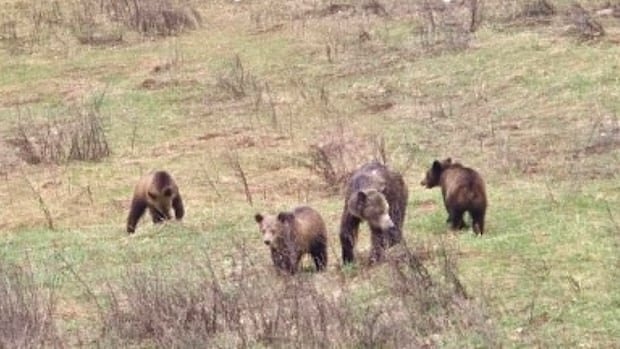

A recent development from the B.C. Conservation Officer Service revealed that on August 14, they euthanized a mother grizzly bear due to concerns about public safety, as the bear had displayed food-conditioned behavior and lost its fear of humans. The two remaining yearlings from the bear family were relocated to an undisclosed location for continued monitoring.
In response to this decision, a rally was held in Nelson, B.C., to protest the killing of a young grizzly bear. This bear was part of a group of grizzlies that have been frequently sighted in and around Nelson.
Katie Graves, the founder of the Ursa Project Society, described the emotional scene at the rally, where community members expressed sadness and embraced each other. She emphasized that the yearling grizzly, which had a leg injury or deformity, was mobile, kept pace with its family, and was able to feed itself.
The B.C. Conservation Officer Service justified their actions by stating that the bear’s age, injury, and history of conflicts made it unsuitable for rehabilitation or relocation. They did not elaborate on the specific conflicts involved.
Graves recalled that the mother bear had previously been relocated after bringing cubs to the area in 2023, only to return shortly thereafter. The fate of the other grizzlies, a sow and two yearlings, remains uncertain, as the Conservation Service has not provided updates.
The incident has triggered a wave of public commentary on social media platforms, with many criticizing the decision to euthanize the grizzly. There is a consensus that better waste management practices and efforts to keep bears away from populated areas are essential to prevent such conflicts in the future.
Wildlife biologist Clayton Lamb emphasized the importance of implementing stronger policies to minimize attractants that draw bears into urban areas. He stressed the difficulty of rehabilitating habituated or food-conditioned bears once they become comfortable in human settlements.
The City of Nelson announced measures to mitigate conflicts with wildlife, such as installing bear-resistant garbage cans and conducting public education programs. Bylaw services are also enforcing regulations on waste management to prevent interactions between bears and humans.