

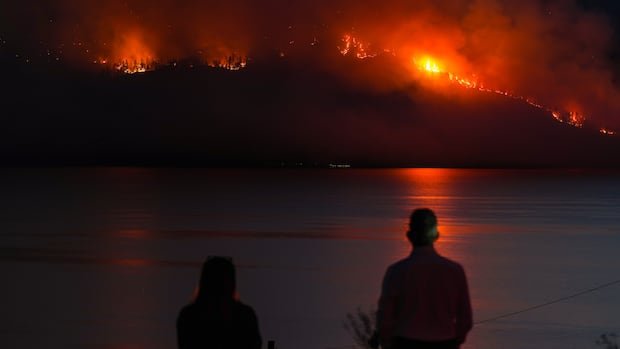

A powerful El Niño event, known as a “super” or “Godzilla” El Niño, has resurfaced in the Pacific Ocean, disrupting global weather patterns amid rising temperatures worldwide. North America and Europe experienced record-breaking heat in July, leading to numerous heat-related fatalities, dried-up water sources, and extensive wildfires. Canada alone witnessed over 4.1 million hectares of forestland consumed by flames, triggering widespread smoke across the eastern half of the country and parts of the northern U.S.
While the scorching summer coincided with the return of El Niño, climate scientists clarify that the phenomenon is not directly responsible for the extreme weather events. However, experts warn that the interplay between El Niño and human-induced climate change could intensify extreme weather conditions.
According to climate scientist Josh Willis from NASA’s Jet Propulsion Laboratory, the impacts of El Niño are expected to be significant across a vast area, ushering in a period of unpredictability. This El Niño occurrence, forming every three to seven years, alters atmospheric conditions, leading to contrasting weather patterns such as increased rainfall in typically arid regions and droughts in wetter areas.
Muhammad Azhar Ehsan from Columbia University’s Center for Climate Systems Research notes that the current El Niño event might rival the intensity of those observed in 2015-16 and 1997-98, the most powerful occurrences on record. The warming world, exacerbated by human activities, could amplify the effects of El Niño, potentially defying previous climate models.
El Niño’s influence extends globally, affecting regions like Canada, the U.S., Peru, Ecuador, Indonesia, and beyond. The warming event is predicted to influence winter conditions in Canada and the U.S., with British Columbia expecting a drier season and the southern U.S. anticipating increased precipitation. The phenomenon also poses risks to marine life, with warm waters threatening fisheries in Peru and Ecuador.
As El Niño continues to evolve, implications are already visible, including alterations in the hurricane season. El Niño typically suppresses tropical storms in the Atlantic while fueling storm activity in the Eastern Pacific. This year has already witnessed a heightened number of storms, including Hurricane Genevieve and Tropical Storm Lala, causing significant impacts on Hawaii.
Experts emphasize that the current El Niño event, unfolding in a world already experiencing heightened temperatures due to climate change, may have prolonged effects lasting well into 2027. The combination of El Niño and climate change underscores the urgency for further research and preparedness in the face of increasingly unpredictable weather patterns.