

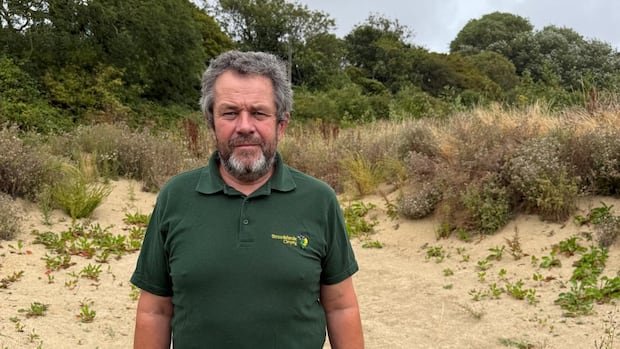

In a field on his farm in southern England, James Baird gestured to the ground where deep cracks had formed. Baird, a crop farmer in West Sussex known for his environmentally friendly practices, expressed astonishment at the state of the land. Having farmed for over 40 years, Baird remarked on the unprecedented conditions of this summer. The harvest of his cereal crops was completed much earlier than usual, with yields at Stroodelande farm plummeting by 25 percent.
The U.K., often associated with rainy weather, has experienced a series of droughts over the past five years, leading to noticeable patterns, according to Baird. The current summer stands out as the driest he has ever encountered. What is typically a lush countryside by early August has turned dry and parched due to consecutive heat waves and a prolonged absence of rain.
Recent reports from the United Kingdom’s Environment Agency declared half of England and all of Wales to be in an official state of drought following an exceptionally severe dry spell. England received only seven percent of its average July rainfall, with southern England receiving a mere one percent, amounting to just 0.7 millimetres.
The ongoing drought has raised concerns not only about immediate impacts on agriculture but also about the long-term water security of Britain. Estimates suggest that by 2050, England could face a shortfall of five billion liters of water per day. These projections have sparked worries about potential food shortages, a looming threat highlighted by the National Farmers’ Union.
The dry spell has taken a toll on various aspects of life in England. Wildfires have become a prevalent hazard, with firefighters responding to nearly 400 incidents in July alone. The combination of extreme heat and dry conditions has heightened the risk of wildfires, posing significant challenges for both farmers and emergency services.
Farmers like Baird and dairy farmer David Christensen are adapting to the changing climate by implementing new strategies. Baird focuses on enhancing soil moisture retention by incorporating organic matter, while Christensen has shifted from planting maize to wheat for better resilience. The impact of the weather is also evident in Christensen’s dairy production, with reduced milk yields attributed to the heat stress on his cows and limited grazing resources.
As the country grapples with the effects of the drought, concerns have been raised about the government’s water management strategies. Water companies are planning to construct new reservoirs, but the timeline for completion extends to the early 2030s. Critics question the government’s approval of water-intensive projects like data centers, highlighting potential conflicts in water usage priorities.
Beyond agriculture, the drought is reshaping England’s inland waterways, affecting communities that rely on these networks for living and leisure. Low water levels have led to closures and disruptions in the extensive canal system, causing challenges for residents and businesses operating along these historic water routes. Despite the challenges posed by the changing climate, individuals like Nici Griffin and Sharon Bull, who run the Three Sheep Cheese Boat, remain resilient in adapting to the evolving conditions as they navigate the waterways.
The dry conditions in England and Wales continue to test the resilience of communities, farmers, and businesses, prompting a reevaluation of practices and strategies to mitigate the impacts of the ongoing drought.