

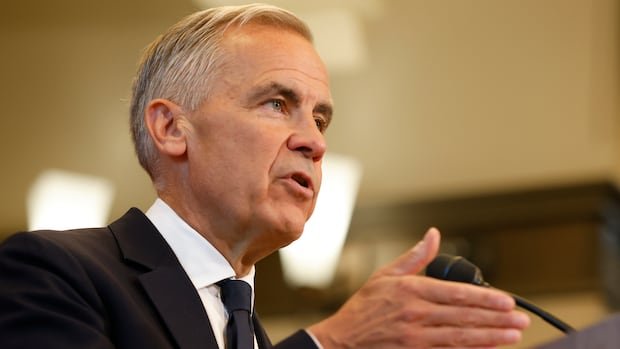

Prime Minister Mark Carney recently disclosed that the breakdown in negotiations with the Trump administration stemmed from the U.S. demanding terms that could severely impact key Canadian industries such as automotive, steel, and aluminum. Despite initial progress, Carney explained that the momentum shifted, leading to an impasse as both sides couldn’t meet each other’s demands.
Contrary to Carney’s statement, U.S. Vice-President JD Vance accused Canada of presenting unreasonable last-minute requests and criticized Carney for alleged exploitation. Ontario Premier Doug Ford, briefed on the discussions, labeled the proposed deal as unfavorable and commended Carney for not proceeding with it.
Flavio Volpe, a member of Canada’s advisory committee, highlighted that although negotiators reached a tentative agreement, discrepancies arose during the drafting of the final agreement by Canadian and American officials. The exclusion of medium- and heavy-duty trucks from tariff relief, particularly affecting pickup trucks like Ford’s F-Series and GM Silverado made in Ontario, posed a significant challenge.
Furthermore, the Americans aimed to restrict Canada’s ability to engage in trade agreements with other nations, jeopardizing Canada’s trade diversification strategy. Carney emphasized the importance of decisions benefiting Canada’s interests rather than being dictated by external forces.
Additionally, the U.S. proposed sectoral tariffs on steel, aluminum, and lumber, with limited concessions on reducing tariffs for Canadian products. The American insistence on maintaining tariffs on steel and aluminum at 25 percent and imposing tariff rate quotas on derivative products further complicated the negotiations.
Carney also mentioned the contentious issue of bilingual product labeling, with the U.S. opposing Canadian regulations ensuring French-language content visibility on streaming platforms. The accumulation of disagreements ultimately led Carney to conclude that the proposed deal did not serve Canada’s best interests.
Despite criticisms and pressures to accept a subpar deal, Carney stood firm on his commitment to securing a favorable agreement for Canada. Polling data showed strong public support for Carney’s decision to walk away from the negotiations. Moving forward, Canada remains cautious about returning to the negotiating table unless presented with a mutually beneficial offer from the U.S. concerning key economic sectors.