

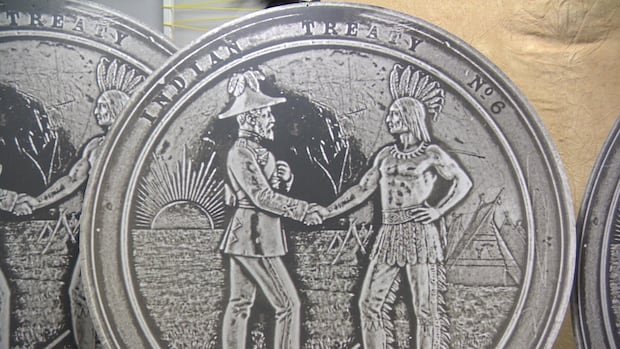

First Nations communities within Treaty 6 territory are commemorating the 150th anniversary of the 1876 treaty signing with the Crown this month. However, the focus on the upcoming Alberta independence referendum has overshadowed the celebrations for some.
The referendum in Alberta includes a question about whether the province should stay within Canada or proceed with a binding referendum on separation. This issue is causing concern among many First Nations individuals who believe it jeopardizes their treaty rights and privileges.
Grand Chief Joey Pete of the Confederacy of Treaty 6 First Nations, representing Alberta nations, expressed plans to encourage voter participation among First Nations members to protect their rights. He emphasized that the treaty is unrelated to Alberta, as the province acts on behalf of the Crown under the agreement.
The treaty secures various rights for First Nations, such as health, education, and the ability to hunt and live off the land, rights that remain valid today. Janice Makokis, an assistant law professor at the University of Windsor and a member of Saddle Lake Cree Nation, highlighted Canada’s legal obligation to act in the best interests of First Nations, warning that leaving Alberta could impact crucial services tied to federal funding.
Amidst the separatist movement in Alberta, Stay Free Alberta initiated a petition last year advocating for the province’s independence. Legal battles ensued between First Nations and the province, with claims that the referendum question threatens treaty rights due to inadequate consultation.
Treaty 6 First Nations organized a series of events leading up to the treaty’s anniversary on August 23. Grand Chief Pete criticized the absence of Alberta’s UCP government representatives at these events, interpreting it as a lack of commitment to reconciliation.
Treaty 6, initially signed in Fort Carlton in 1876, spans central Alberta and Saskatchewan, with additional signatories from Manitoba. Dwayne Donald, a professor at the University of Alberta, emphasized the treaty’s significance in Alberta’s history and its role in the country’s formation.
Various separatist groups in Alberta have proposed differing scenarios for First Nations in an independent Alberta. While some argue for enhanced economic autonomy, others stress the continuity of treaty rights. Despite assurances, some First Nations leaders remain skeptical, emphasizing the irrevocable nature of international treaties.
Donald highlighted the overlooked history of Edmonton’s North Saskatchewan River valley, shedding light on the displacement of Indigenous communities to accommodate urban expansion. He criticized the separatist movement for disregarding the region’s Indigenous heritage and the enduring connection to the land.
The ongoing debate over the Alberta independence referendum underscores the complex intersections between historical treaties, Indigenous rights, and contemporary political developments in the province.