

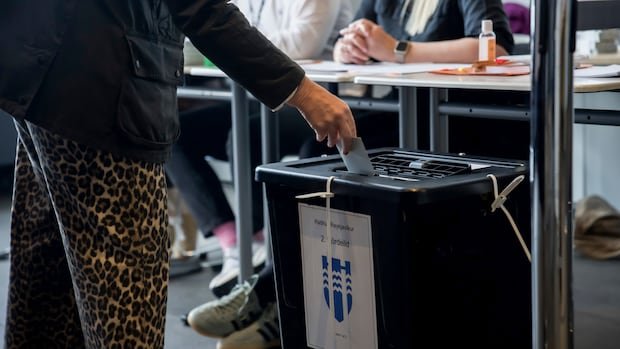

Voters in Iceland headed to the polling stations on Saturday to make a crucial decision on whether the country should recommence stalled discussions to potentially join the European Union, amid concerns raised by U.S. President Donald Trump’s expressed interests in Greenland.
The referendum posed a straightforward question to approximately 265,000 eligible voters: Should Iceland restart negotiations with the European Union for membership? A positive vote would kickstart talks with the European Commission across 35 different sectors, ranging from the economy to human rights. Proponents believe that EU membership could offer safeguards in case of any future threats from Trump and foresee economic advantages from joining the union.
Conversely, a rejection of the proposal would mean a halt, at least for a generation. Critics have highlighted fears about the impact of EU membership on Iceland’s valuable fishing resources and argue that the country already benefits from participation in the EU’s seamless single market and the Schengen area for visa-free travel.
Anticipated to be a closely contested decision, more than 20% of voters have already cast their ballots before the official referendum day, according to Iceland’s national broadcaster RÚV.
The specter of Trump’s interest in Greenland, notably earlier this year when he discussed U.S. control over the territory, has resonated in Iceland, located just 290 kilometers from the Danish-governed region. Trump’s repeated mentions of Iceland in his remarks about Greenland caused unease among some Icelanders.
Though Trump has suggested that any claim on Greenland would not involve military force, his continued attention to the issue has raised concerns. This has spurred questions among Icelanders about the possibility of their country being targeted next, prompting considerations on whether EU membership could serve as a defense against potential future moves by Trump in the North Atlantic.
The current left-leaning coalition government in power since 2024 believes that EU membership could offer a shield against uncertain U.S. policies, which prompted the decision to push forward the EU referendum planned for the following year.
Discussions about EU membership are not new in Iceland, which officially terminated its prior bid to join the EU in 2015 due to fears about the impact on its abundant fishing reserves. Fishing is a vital part of Iceland’s identity, with fishing rights being a significant topic in the lead-up to the referendum.
Joining the EU would require Iceland to adhere to the bloc’s common fisheries policy, allowing access to its waters by vessels from other EU nations. The government has indicated a desire for a special arrangement, potentially seeking an exemption from the policy.
As the referendum date nears, Prime Minister Kristrún Frostadóttir has emphasized to voters that the current vote is not final, and there will be another referendum if and when Iceland reaches an agreement on EU membership.
The decision on EU membership is seen as pivotal for Iceland’s national character and culture. Iceland, having fought and won the Cod Wars with Britain in the 1970s over fishing rights, maintains a proud history of defending its interests against larger European nations.
Supporters of EU membership argue that closer ties with European allies are crucial to addressing transnational challenges like climate change, and advocate for the stability that the euro currency could bring compared to Iceland’s volatile króna. Conversely, opponents contend that Iceland already benefits from European integration without sacrificing sovereignty that full EU membership entails, citing advantageous trade agreements like the one with China.
Former Prime Minister Katrín Jakobsdóttir expressed her belief that Iceland is better off maintaining its current relationship with the EU rather than pursuing full membership.