

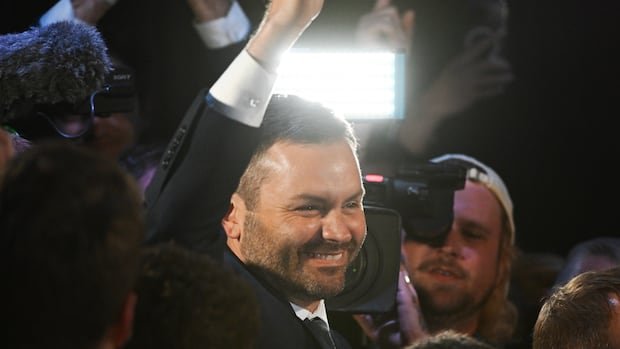

Quebec’s political landscape has undergone a significant transformation, as the Parti Québécois has secured a minority government following a complete redraw of the electoral map. Paul St-Pierre Plamondon led his party to a remarkable increase from three seats in 2022 to 59 seats in the recent election. Despite this success, St-Pierre Plamondon fell short of obtaining a majority, which may hinder his ability to implement his agenda, including pursuing a referendum on Quebec’s independence.
In his victory speech, St-Pierre Plamondon emphasized his commitment to collaboration with other parties and pledged to maintain open communication with Prime Minister Mark Carney, indicating potential tension in their relationship. He extended a message to English-speaking residents of Quebec, assuring them of his dedication to representing all Quebecers and highlighting a shared destiny.
While St-Pierre Plamondon expressed aspirations for Quebec’s sovereignty, the likelihood of a referendum in the near future seems dim. He proposed delaying any referendum until 2029 or 2030, citing the departure of U.S. President Donald Trump as a factor. However, the typical duration of minority governments in Quebec raises doubts about the feasibility of such a timeline.
In a surprising turn of events, the Coalition Avenir Québec (CAQ), which had previously enjoyed a significant majority, failed to secure a single seat in the election. Christine Fréchette, who succeeded François Legault as premier, faced voter dissatisfaction after eight years of CAQ governance. The future prospects of the party are now in question, given its lack of representation in the National Assembly.
The Liberal Party experienced a stronger-than-expected performance, nearly doubling its seat count from 19 to a projected 40 seats. Liberal Leader Charles Milliard emphasized the importance of a collaborative approach in the National Assembly, signaling a willingness to engage with proposals from other parties while firmly opposing any potential referendum initiatives.
The Conservative Party made significant gains, going from zero seats in 2022 to 19 seats in the latest election. Leader Éric Duhaime, known for advocating tax and spending reductions, celebrated the party’s newfound success and highlighted their role as a credible alternative. The Conservatives may align with the Parti Québécois on certain policy priorities.
The election results have raised questions about the need for electoral reform in Quebec. Promises from various parties, including the Parti Québécois, Conservatives, and Québec Solidaire, to revamp the voting system are likely to gain momentum following the election outcome. The PQ’s formation of a government with less than 30% of the popular vote marks a significant deviation from historical norms, prompting renewed calls for a review of the province’s electoral system.