

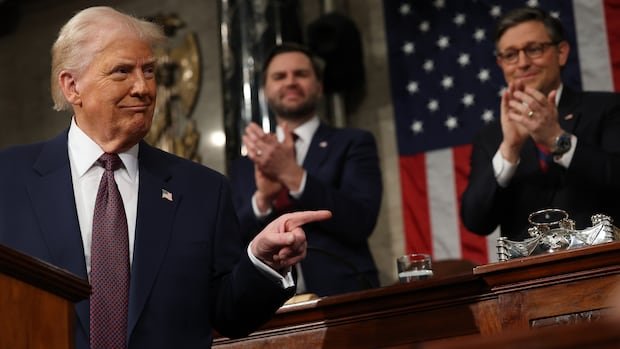

Republicans are gearing up for the upcoming U.S. midterm elections in November, feeling the pressure to defend their House majority as Democrats gain ground in key races. The outcome of these elections goes beyond Congress’s power balance. If Democrats secure control of both the House and Senate, they would have the leverage to scrutinize the Trump administration, challenge its policies, and influence legislative decisions.
While a shift in Congress could occur, it may not necessarily limit the President’s authority to act. Reporters Katie Simpson, Willy Lowry, and Paul Hunter analyze the potential impact of a party change in Congress and the Senate on Trump’s authority and its implications for Canada-U.S. trade relations.
In response to a listener question about the significance of Democratic control of Congress given Trump’s reliance on executive orders, discussions highlight the typical process of introducing policy changes by presidents and Trump’s distinct approach. Trump has demonstrated his ability to operate independently of Congress through executive orders, even with a Republican-controlled but divided Congress. This includes actions such as declaring emergencies, imposing tariffs, and challenging birthright citizenship.
The analysis suggests that Trump’s ability to advance his agenda through executive orders will likely remain unaffected by potential changes in Congress post-midterm elections. While he may encounter more obstacles, investigations, and potential impeachment proceedings, the fundamental aspects of his governance through executive actions are expected to persist regardless of the election outcomes. The balance of power in Congress currently plays a limited role in checking Trump’s authority, with the court system being identified as a more effective constraint.
Trump’s recent statement of intending to exercise his veto power if legislation contrary to his agenda is passed further underscores his commitment to pursuing his policies through executive actions and departmental powers, emphasizing a continuation of his agenda despite potential shifts in Congressional power dynamics.