

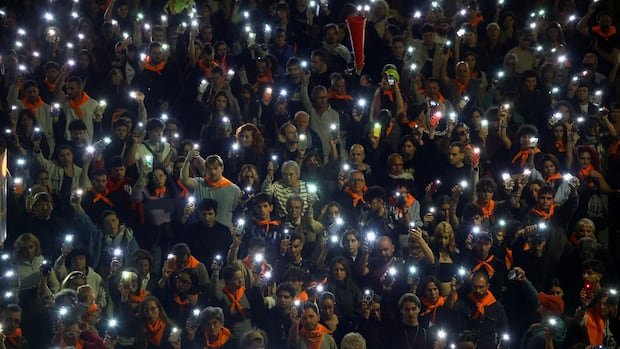

Spanish Prime Minister Pedro Sánchez has announced a snap election on October 5 amidst widespread protests across Spain over the issue of affordable housing. The election, set for November 29, will cut short Sánchez’s term in office by six months, showcasing his willingness to take bold political risks.
The decision to call for the election came after the government faced challenges in gaining parliamentary approval for two initiatives aimed at tackling the housing crisis in Spain. However, shortly after the election announcement, the government made adjustments to the proposed measures, which now include rent controls, a temporary eviction ban, and restrictions on corporate property purchases.
Sofía Olivares, a 25-year-old student and representative of the housing advocacy group Derecho al Techo (Right to Housing), criticized the government’s delayed attention to social housing amidst the escalating protests and unrest in the country.
While opinion polls indicate a potential victory for right-wing parties, Sánchez is banking on the housing crisis to rally support and secure a parliamentary majority. Since assuming office in 2018, he has relied on coalition partners due to his party’s lack of a parliamentary majority.
By focusing on housing affordability as a key campaign issue, Sánchez aims to garner support from progressive voters while diverting attention from other political vulnerabilities, such as corruption investigations within his inner circle and the ongoing crisis in Ceuta.
The housing demonstrations erupted following the forced eviction of María del Carmen Abascal, an 87-year-old woman known as Maricarmen, who passed away on October 7, becoming a symbol of the housing crisis in Spain.
In Las Palmas de Gran Canaria, residents have also taken to the streets in protest against the prioritization of tourism over housing policies by the regional government. The lack of rent controls and limited land availability have exacerbated the housing crisis, leading to numerous evictions across the Canary Islands.
The shortage of public housing is a significant concern, with over 30,000 people in the Canary Islands alone on waiting lists for affordable housing. Spain’s housing stock includes only about 1.7% of social housing units, far below the European Union average, with a current deficit of approximately 750,000 homes.
Right-wing parties have criticized Sánchez’s migration policies, arguing that they contribute to the strain on the housing market. The upcoming election could potentially see a conservative coalition led by the People’s Party and the anti-immigration party Vox take power, marking the far right’s entry into Spain’s national government for the first time since the transition to democracy.
Real estate industry representatives have expressed concerns that the government’s housing measures may have unintended consequences, such as reducing the rental supply and hindering property market dynamics. Calls for increased investment in public housing, land development, and streamlined building permit processes have been emphasized to address the housing crisis effectively.