

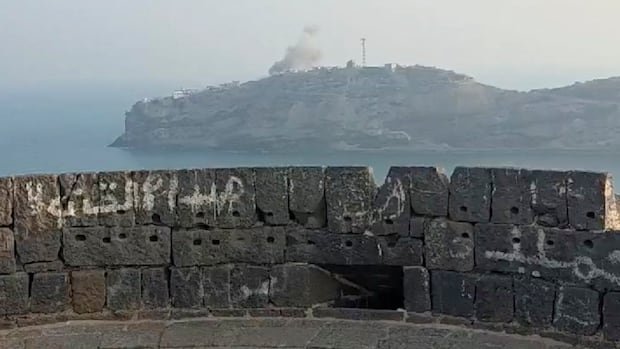

Yemen’s Houthi rebels launched missiles at the presidential palace compound in Aden, resulting in the deaths of two guards. Concurrently, the Saudi-led coalition reported numerous assaults on Saudi infrastructure amid the mounting tensions.
This assault marked the first direct conflict between the Iran-aligned Houthis and Saudi Arabia in Aden’s al-Maashiq palace, the administrative center of Yemen’s government recognized by Saudi Arabia and the international community. The incident unfolded as part of a broader regional conflict triggered by U.S. and Israeli military actions against Iran in February.
Yemen’s Information Minister, Moammar al-Eryani, confirmed the safety of the government’s prime minister and cabinet members post-attack. Eyewitnesses reported hearing loud explosions near the palace, indicating a missile and drone strike. Tragically, two guards lost their lives in the assault.
Houthi military spokesperson Yahya Saree claimed responsibility for the attack, targeting what he described as the Saudi military command center in Aden. The Houthi-run news agency, SABA, alleged that the headquarters housed Saudi officers and weapon stockpiles, although these claims remain unverified.
Recently reignited clashes between Houthi forces and Saudi-backed factions in Yemen have raised concerns among aid organizations as conditions deteriorate rapidly. Government forces initiated a campaign to reclaim territories from the Houthis, making progress near the Bab el-Mandeb Strait, a crucial global shipping route.
Residents of Taiz, located northwest of Aden, are facing heightened bombardment and dwindling resources as Houthi forces tighten their grip around the city, the third-largest urban area in Yemen. The conflict in Yemen traces back to 2014 when the Houthis captured the capital, Sanaa, prompting a Saudi-led military intervention the following year, leading to a prolonged deadlock until a fragile truce in 2022 that collapsed this year.
In retaliation, the Houthis have targeted Saudi airports, ports, and oil facilities with ballistic missiles and drones, posing a significant threat to Saudi Arabia’s civilian infrastructure and economic stability. The Saudi-led coalition disclosed multiple attempted attacks by the Houthis on various sites, including civilian airports, aircraft, and aviation infrastructure in Saudi Arabia.
Global Affairs Canada issued a travel advisory cautioning against visiting Saudi Arabia amidst the escalating conflict. Coalition spokesperson Turki al-Maliki reported 20 recent Houthi attacks on King Khalid International Airport in Riyadh, resulting in casualties. The coalition condemned the Houthi assaults on Abha airport, which claimed lives and caused injuries.
Allegations suggest that the Houthis have acquired advanced weaponry, including ballistic missiles and drones, with support from unspecified regional actors. The coalition retaliated by targeting weapons storage facilities and launch sites in Yemen’s mountainous regions, urging the Houthis to cease operations targeting civilians and civilian infrastructure immediately.
The Houthi military spokesperson warned of unsafe Saudi airspace and airports, advising airlines to avoid certain areas, except for the holy cities of Mecca and Medina. In response to potential threats, Saudi Arabia’s civil defense authority issued alerts in Najran, later confirming the situation was under control. The coalition intercepted and destroyed drones launched toward Khamis Mushait and the southern region of Saudi Arabia.
The situation remains tense as clashes persist, underscoring the complex and volatile nature of the conflict in Yemen and its broader regional implications.