

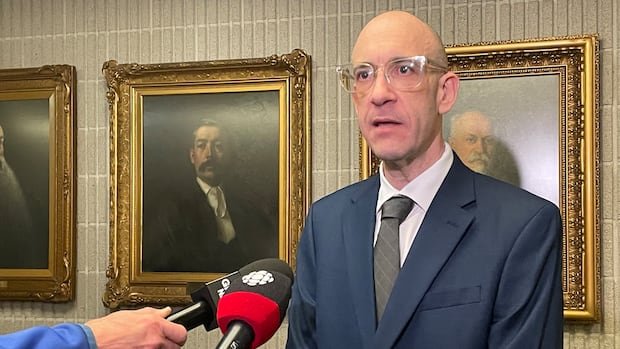

During a recent hearing, a legal expert contended that legislation enacted by Quebec’s forthcoming legislature would lack legitimacy if a majority of MNAs declined to take the Oath of Allegiance.
Lawrence David, the founder of the Public Interest Litigation Institute (PILI), asserted that Quebec’s Bill 4, which eliminated the requirement to swear allegiance to the King, could render MNAs illegally present in the National Assembly.
According to David, politicians who abstain from taking the oath are not authorized to sit in the National Assembly, engage in parliamentary proceedings, or vote on bills. He made these statements outside the Quebec Superior Court to reporters.
David and PILI are striving to challenge the constitutionality of Bill 4, which was unanimously passed in 2022. Meanwhile, they are seeking an injunction from the court to compel MNAs to take the oath before November 17, the anticipated date for the National Assembly’s reconvening.
Quebec’s legal representatives informed the court that the government is contemplating postponing the reconvening date to November 24.
Close to 100 MNAs underwent the swearing-in process over the past week, all of whom disavowed the oath. The incoming premier, Paul St-Pierre Plamondon, has requested that the lieutenant-governor, who represents the monarchy, abstain from presiding over the cabinet’s swearing-in ceremony on Wednesday.
David highlighted that the events of the past week and St-Pierre Plamondon’s intentions to sever ties with the monarchy undermine the King’s status and role, potentially inviting disrespect towards his office, authority, and legitimacy.
Moreover, David pointed out that the failure to take the oath could impact the lieutenant-governor’s power of royal assent, which is crucial for bills to become law.
“This legal challenge does not revolve around monarchy versus republicanism but rather centers on upholding constitutional respect,” David emphasized.
He suggested that alternative pathways exist if Canada wishes to detach from the monarchy, stressing that such decisions necessitate consent from other provincial legislatures.
Contrarily, lawyers representing the Attorney General of Quebec argued that there is no pressing need to address the constitutionality of Bill 4 before the National Assembly resumes its activities. They highlighted that since its enforcement in 2022, the law has not impeded the legislature from functioning or passing laws smoothly.
Previously, the Parti Québécois’ three MNAs had been barred from the National Assembly’s Blue Room until the law was enacted due to their refusal to swear allegiance to the King.
The law amends the Constitution Act of 1867 by exempting Quebec from the provision that mandates the oath.
Judge Demers will review the arguments and issue a verdict before the session commences next month.