

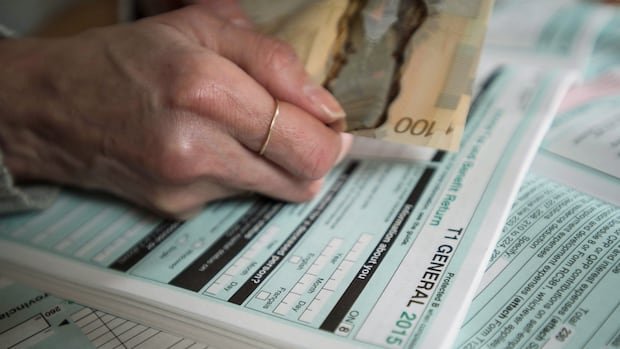

The province has been highlighting significant financial figures leading up to the Oct. 19 referendum. Many of these numbers support the assertion that temporary residents contribute minimal taxes compared to the benefits they receive from publicly funded services. Alberta Premier Danielle Smith shared on social media that for every $1 in taxes paid by a guest worker, taxpayers cover $10 in services, which she deems unsustainable.
According to the provincial government, temporary residents in Alberta contribute an estimated $150 million annually in provincial taxes. However, the same group is estimated to cost the province over $1 billion each year in health, education, and social services. Economists specializing in tax policy and public finance argue that the $150 million figure only reflects income taxes paid to the province by non-permanent residents and does not encompass federal income taxes, which are also significant.
Gillian Petit, an economist at the University of Calgary, emphasized the importance of considering federal income tax contributions in such comparisons. She estimated that in 2025, non-permanent residents in Alberta paid at least $835 million in provincial and federal taxes, a figure she believes is conservative. Petit’s calculation excluded other taxes like payroll, sales, and property taxes paid by non-permanent residents.
Professor Ron Kneebone from the University of Calgary stressed that temporary residents are subject to the same tax rules as Canadian citizens and permanent residents under Canada’s progressive income tax system. He highlighted that tax rates are determined by income brackets, and the higher the bracket, the more taxes are paid, regardless of immigration status.
The province’s $1 billion cost estimate for providing services to temporary residents is based on Statistics Canada data, indicating around 292,000 non-permanent residents in Alberta. The operational cost of education for approximately 45,544 children of temporary residents is estimated at $600 million, with the remaining $400 million attributed to health care.
Petit pointed out that non-permanent residents are typically younger and may use health care services less than Canadian citizens. She also noted that they are not eligible for all provincially-funded social support programs. Kneebone added that all adults in Alberta, regardless of immigration status, may not fully cover the costs of health care through taxes alone, as the system is designed to utilize other revenue sources like oil and gas royalties.
Overall, the discussion around the financial contributions and costs associated with temporary residents in Alberta is complex and involves various factors beyond income taxes alone.