

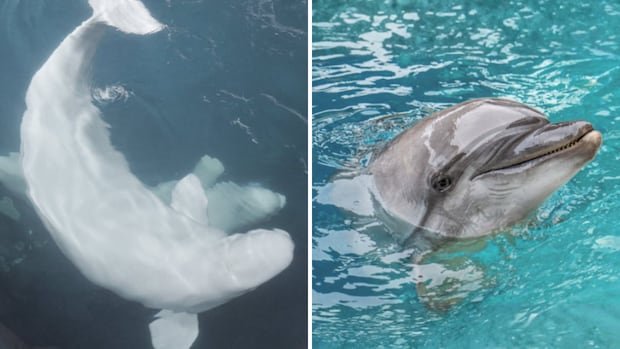

Oceanogràfic València revealed in a news release on October 14 that a beluga whale and dolphin that passed away shortly after being moved out of Marineland had exhibited various health issues and organ irregularities that might have existed before the relocation.
The Spanish aquarium stated that these abnormalities could have developed prior to the animals’ arrival in Valencia and may not have been evident during initial health assessments before the transfer.
The beluga named Jelly Bean and the dolphin named Echo, along with three other dolphins and another beluga named Cleopatra, were transferred to the Valencia aquarium on August 27 but died less than a month later. Additionally, four other beluga whales from Marineland and another beluga not originally from Marineland have also passed away since being rescued at Chicago’s Shedd Aquarium.
The necropsy, conducted by Oceanogràfic València, revealed preliminary findings including Jelly Bean’s development of a complex clinical condition with metabolic disorder and electrolyte imbalance before her demise.
-
Ex-Marineland beluga whale dies in Chicago aquarium
-
Marineland belugas that died in Chicago had chronic inflammatory disease, preliminary necropsy findings show
-
Marineland dolphin dies at Spain aquarium, marking 5th death after rescue transfer
Post-mortem findings revealed abnormalities in Jelly Bean’s heart, as well as an enlarged thyroid gland and shrunken adrenal glands, crucial for metabolic regulation.
In her final days, Jelly Bean displayed unusual behavior, including ingesting water that exacerbated her condition. The 19-year-old beluga had encountered feeding problems upon arrival but had shown signs of improvement before her passing on September 18.
CBC News attempted to contact Marineland for input on the necropsy findings but did not receive a response before publication.
Dolphin requiring ‘continuous veterinary care’
Echo, a 30-year-old Black Sea bottlenose dolphin, was the fifth animal to pass away within a month post-transfer.
Oceanogràfic València reported that Echo arrived with severe vision impairment and limited mobility in one flipper. Leading up to her death, Echo exhibited neurological and respiratory symptoms necessitating continuous