

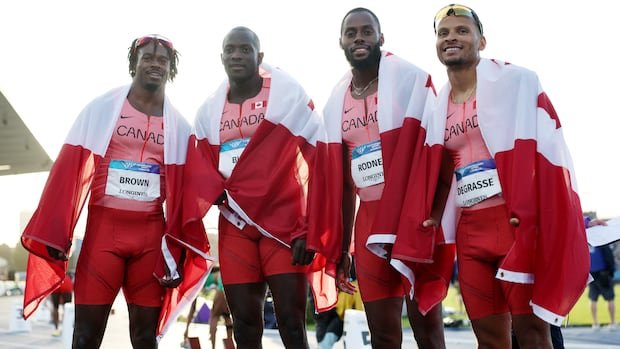

Canada’s 4×100-meter relay teams at the Commonwealth Games faced different expectations, despite both earning silver medals. The women’s team, second-fastest heading into the final behind Jamaica, considered a silver win a success. On the other hand, the men’s team had the fastest seed time and a stellar performance at the World Relays. Their silver medal felt like a triumph due to the high expectations placed on them.
The men’s team initially faced disqualification due to an alleged lane violation by Aaron Brown. However, video evidence later proved his innocence, securing Canada’s silver medal position. This turn of events transformed a potential loss into a victory, raising questions about the team’s future post-LA28.
As the men’s relay team ages, the integration of new talent becomes crucial for sustained success. The emergence of young sprinters like Lachlan Kennedy from Australia highlights the need for fresh speed in the Canadian squad. With veterans on the team, the search for new talent and potential breakthroughs remains essential for future competitions.
While uncertainties loom over the team’s composition moving forward, the importance of continuity in relay running cannot be overstated. Unlike the men’s team, the women’s squad enjoys flexibility in lineup changes and experimentation. As the clock ticks towards LA28, Canada’s men’s relay team faces the challenge of maintaining chemistry while introducing younger talent to stay competitive against the world’s fastest relay teams.