

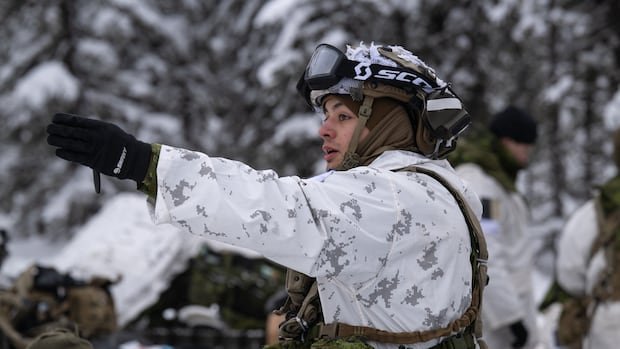

A set of internal documents from the Department of National Defence indicates that Canadian military personnel were not adequately prepared and at times lacked necessary equipment to handle the extreme conditions they encountered during a significant training exercise with U.S. forces in Alaska last winter. The assessment reports, acquired by CBC News, reveal that the military has much to improve on and a significant distance to cover in enhancing its capacity to safeguard the Arctic.
The training exercise involved more than 400 members of the 3rd Battalion Royal Canadian Regiment (3RCR), integrated into a larger U.S. Army brigade during Exercise Global Response in February at the Joint Pacific Multinational Readiness Center near Fairbanks, Alaska. The federal government has committed to maintaining a presence in the Far North almost year-round, and the reports suggest that troops must shift their focus from reliance on technology to emphasizing fundamental skills to effectively engage and survive in combat situations, as per defense analysts.
Both Canadian and American evaluations, prepared separately, highlighted numerous concerns raising doubts about the readiness of troops and their equipment to operate in severe conditions where temperatures drop below -30°C. A Canadian evaluation criticized a recent initiative that allowed the regiment to purchase civilian gear off-the-shelf to supplement military cold-weather equipment, leading to complications. According to the evaluation, some Canadian units lacked emphasis on essential winter survival skills.
Lt.-Col. Aaron Corey, the commander of 3RCR, countered these criticisms, stating that his troops underwent a year of winter condition training before the Alaska deployment. He emphasized that every soldier participating in the exercise was qualified as a cold weather operator, with leaders receiving specific cold weather training, and Arctic operations advisers supporting the battalion.
Despite facing challenges such as frostbite affecting up to 30 troops, the battalion successfully achieved its training objectives during the exercise. Corey highlighted that the experience taught troops valuable lessons, particularly the need to account for weather conditions and adjust their pace accordingly, considering weather as a significant adversary. The report also noted the success of the battalion in capturing its training objectives.
The evaluations highlighted various gaps in the medical team’s understanding of their roles during the exercise, including limited professional development on Arctic medicine principles. Issues with battery drainage for drones in cold weather and communication disruptions due to satellite limitations were also noted. The American assessment, conducted by the Ted Stevens Center for Arctic Security Studies, pointed out similar challenges faced by U.S. units, emphasizing the necessity for basic preparation.
Experts like retired colonel Pierre Leblanc stressed the importance of relearning essential skills due to the significant gap in Arctic operations experience over the years. They emphasized the need for a back-to-basics approach in the Arctic, where reliance on technology may not always be feasible. While recent increases in defense spending have facilitated more winter exercises, experts like Rob Huebert highlighted the need for a broader mindset shift and emphasized the importance of adapting to large-scale operations in the Arctic.