

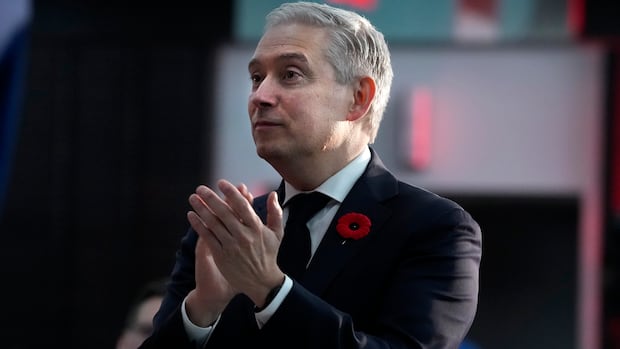

On Thursday, Prime Minister Mark Carney will present his second federal budget, as the Liberal government outlines its next steps to assist the nation during a period of affordability challenges and ongoing trade disputes.
In the first 20 months of his leadership, Carney has concentrated on reshaping the Canadian economy to stimulate growth. Finance Minister François-Philippe Champagne has promised additional insights into forthcoming measures aimed at further enhancing economic development.
During a press briefing on Wednesday, while crafting his own shoes—continuing the tradition of finance ministers receiving a new pair before presenting an economic update—Champagne stated that the upcoming document will demonstrate how Canada can take control of its own future.
“Investment in growth is essential, and collaboration with businesses is crucial. We must also prioritize our sovereignty,” he emphasized.

Champagne showcases a boot during his tour of the Pajar shoe factory in Montreal on the eve of the budget. (Graham Hughes/The Canadian Press)
Some indicators are suggesting that these investments are yielding results: the Bank of Canada and the International Monetary Fund forecast about two percent GDP growth for the next year. Although the OECD anticipates slightly lower growth, it still projects a rate higher than all other G7 nations except the U.S.
The unemployment rate, which has experienced considerable fluctuations due to trade uncertainties, is currently lower than it was last year.
Foreign direct investment in Canada remains robust, and the recently introduced “productivity mega-deduction,” a significant initiative allowing businesses to write off investments with tax benefits, is intended to further stimulate the economy.
Canadians might also have an opportunity to participate in the anticipated growth: the budget could outline how individual investors may eventually invest in the Canada Growth Fund, a new Crown-controlled sovereign wealth fund set to acquire stakes in major projects and enterprises.
Measures for Affordability
However, Champagne noted that more efforts are required regarding the issue that many voters indicate as their primary concern: the increasing cost of living, which intensified late last month after the Bank of Canada raised interest rates to combat inflation.
David Coletto, a pollster with Abacus Data, remarked in an interview, “Mark Carney is among the most favored prime ministers we’ve ever had, yet people continue to cite affordability as the foremost issue.”
“However, this popularity does not guarantee longevity. Citizens still need to perceive that this government is addressing their everyday challenges.”
Recent Statistics Canada employment data indicates that while average hourly wages increased approximately 2.3 percent year-over-year as of September, they did not keep pace with the three percent rise in consumer prices during the same timeframe.
Record levels of food bank utilization have been recorded this year as numerous individuals find it challenging to purchase essential groceries.

Food bank usage continues to rise across Canada. (Sammy Kogan/The Canadian Press)
The current government has restricted immigration since taking office, significantly reducing the number of temporary migrants in an effort to stabilize housing costs.
This strategy appears to have yielded some results: national average home sale prices are 22 percent lower than the peak seen in March 2022, and rents have decreased by approximately nine percent from their all-time high in May 2024, based on the latest industry data.
The budget will outline immigration targets for the next two years.
The Conservative Party has criticized the government for rising prices, urging Carney to take additional measures to alleviate the burden of energy price hikes primarily driven by the U.S. and the Israel-Iran conflict.
They also advocate for further reductions in immigration levels, presenting it as part of the affordability strategy.
Conservative Leader Pierre Poilievre told reporters on Wednesday, “Our mission as Conservatives is to help you save money, and that’s our demand for the budget,” reiterating his call for additional tax relief on energy products.
“After a year and a half of Mark Carney, everything has worsened.”
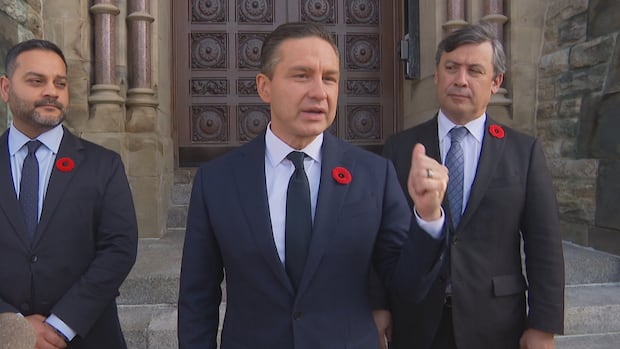
When asked about the U.S. midterm election results, Conservative Leader Pierre Poilievre remarked that ‘Americans dislike tariffs.’ He suggested that Canada is well-regarded among the American populace and offered to work with Prime Minister Mark Carney to capitalize on that goodwill for a trade agreement.
NDP Leader Avi Lewis is advocating for the government to implement a wealth tax, establish 50 government-operated grocery stores, and make “a nation-building investment in health care.”
The administration is aware of the criticism regarding its perceived inaction on affordability issues, frequently citing last year’s income tax reduction, the elimination of the consumer carbon tax, and the temporary suspension of federal levies on gasoline as evidence of its efforts.
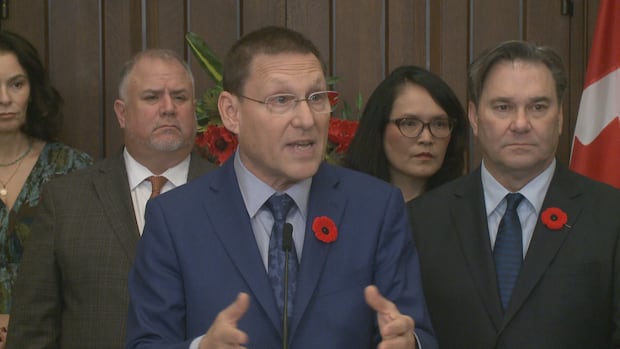
On Wednesday, NDP Leader Avi Lewis proposed a ‘wealth tax’ starting at one percent for individuals with assets exceeding $10 million, suggesting it could generate $40 billion annually for the government. ‘It is time to tax wealth in Canada, not just income,’ Lewis stated.
Following the recent midterm elections in the U.S., where Trump’s Republican Party faced a significant defeat partly due to rising prices, politicians in Canada are clearly responsive to calls for more action to prevent voter dissatisfaction.
Champagne stated, “We must prioritize caring for Canadians and making life more affordable.”
“We have already implemented many measures to assist Canadians, but we recognize the need for continued support at this time.”
Management of the Deficit
As Ottawa introduces new initiatives, it remains cautious about the deficit, which may be smaller than anticipated due to rising oil prices benefitting government revenues.
Even if the deficit is reduced, it is still expected to exceed historical averages prior to the 2020s, and the parliamentary budget officer forecasts that these figures will remain elevated for years to come.
The spring economic update estimated the deficit at $75 billion for the 2026-27 fiscal year.
This estimate is likely to change after factoring in revenue increases from energy and additional spending on initiatives such as supporting industries affected by tariffs like auto manufacturing and steel.
The PBO estimates the deficit to be around $63 billion this year, set to rise to $70 billion next year, further contributing to the federal debt, which is becoming increasingly burdensome as interest rates climb.
Carney has restructured the way the government presents its expenditures, categorizing federal spending into two groups: everyday operating expenses and capital infrastructure. The government is anticipated to outline its strategy to achieve a balanced operational budget by 2027-28.
Details about the government’s intention to privatize some of Canada’s major airport operations are also expected in this budget. These sales could generate significant funds, which might be allocated to other planned infrastructure projects or to reduce debt.
Regardless of the developments, Poilievre is skeptical: “Mark Carney is disconnected from reality. His spending is unchecked. Canadians are running out of money.”
Expenditure on Defence
This budget is likely to provide Canadians with clearer insights into the Carney administration’s defence spending, including the allocation of funds and their sources.
In the past year and a half, tens of billions of dollars have been invested in national defence to meet NATO’s previous target of two percent of gross domestic product.
The Western military alliance is now urging member countries to increase their spending to five percent of GDP (3.5 percent for direct military expenses and 1.5 percent for defence infrastructure) by 2035.
During the recent NATO summit held in Turkey, Carney committed to providing taxpayers with a full accounting.
“We will present an update in the budget detailing our decisions, the fiscal trajectory, defence expenditures, and how we are allocating the one-and-a-half percent for defence-related resilience and expenditures. This is the appropriate time to provide this information,” Carney stated.
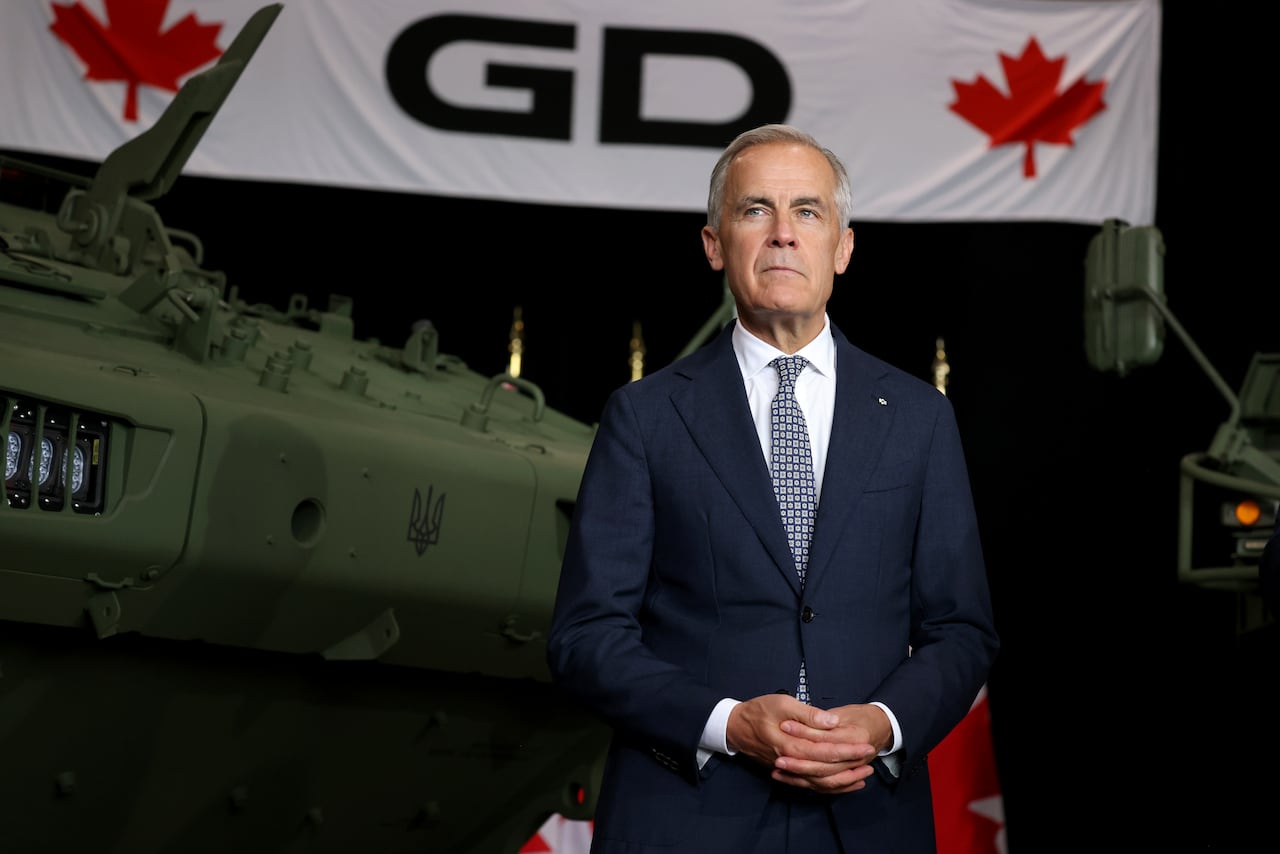
Prime Minister Mark Carney has indicated the budget will update how NATO defence spending targets are being met. (Nicole Osborne/The Canadian Press)
Dave Perry, a defence analyst at the Canadian Global Affairs Institute, remarked that details regarding how Canada achieved the two percent target and the path to five percent are long overdue.
He noted that last year’s budget contained merely 215 words on defence spending, which lacked sufficient explanation and justification.
According to him, the government must provide clearer information on the equipment it plans to procure and the funding methods for these purchases.