


On Wednesday, officials from Iran expressed their satisfaction with the U.S. electorate’s rejection of the Republican Party and President Donald Trump during the midterm elections, as the region anticipated how these outcomes might influence the ongoing conflict with Iran.
Worries regarding the war’s consequences, especially the discontent over escalating costs for fuel and other commodities in the United States, contributed to the Democratic Party securing control of both houses of Congress in the recent vote.
Iran’s chief negotiator and parliament speaker, Mohammad Bagher Qalibaf, stated on X, “Whether due to moral reasons or economic pressures, Americans have said NO TO WAR, and we support this sentiment. If the U.S. [government] chooses to disregard the will of its people in favor of international interests and extortionists, it will discover that our NO carries significant repercussions.”
The entire region remains tense with the possibility of the U.S. resuming substantial military actions against Iran for the first time in nearly two months. Efforts to avert renewed hostilities are ongoing, while other U.S. allies in the area are advising Washington against reinitiating full-scale military interventions in a conflict that has lasted for over eight months, causing turmoil in the global economy and severe consequences for Iran.
Reports indicate that Israeli Prime Minister Benjamin Netanyahu has advocated for increased strikes, while Trump has fluctuated between threatening significant attacks and seeking a diplomatic resolution.
-
live updates
U.S. midterms deliver a blue wave, a night of firsts and a fierce rebuke of Trump
-
FRONT BURNER
Voters punish Trump in midterm blowout
Despite ongoing ceasefire agreements and various diplomatic initiatives, military clashes have persisted in southern Iran and around the Strait of Hormuz, intensifying fears of a return to full-blown conflict.
Iran’s supreme leader asserted that those who believe changes in U.S. political parties can alter its hostility toward the Islamic Republic are “seriously mistaken.”
In a message shared via social media, Ayatollah Mojtaba Khamenei, who has not made a public appearance since the war commenced with U.S. and Israeli assaults on February 28, stated: “Anyone holding onto even a faint hope for behavioral changes or shifts in the political landscape within the dominant system, or who believes that concessions to America will deter its animosity toward the Iranian nation, is gravely mistaken.”
Iranian sites targeted prior to midterms
The midterm elections coincided with what seemed to be a targeted U.S. strike on Iranian installations in the strategically significant Strait of Hormuz, prompting speculation about subsequent actions.
Iranian state news reported explosions on Qeshm and Hengam islands, as well as near the southern port city of Bandar Abbas on Monday. Iranian officials have not publicly detailed the specific locations impacted or the degree of damage incurred.
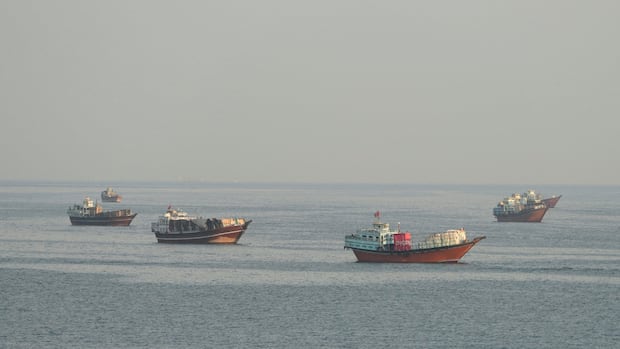
Prior to the conflict, the Strait of Hormuz was a crucial transit route for approximately one-fifth of the global oil supply, which has seen numerous incidents involving commercial shipping. Since the onset of hostilities, Iran has imposed severe restrictions on maritime traffic through the strait, while the U.S. has enforced a naval blockade on Iranian ports.
Iran’s deputy parliament speaker, Ali Nikzad, connected the Republican Party’s electoral defeats to Washington’s approach toward Iran. He remarked to lawmakers on Wednesday that U.S. sanctions had not succeeded in crippling Iran’s economy or compelling its citizens to capitulate.
Nikzad stated, “The enemy’s attempts to undermine Iran’s economy have consistently failed,” and added, “These defeats are the repercussions of their defeat at the hands of the Iranian populace.”
Iran observes anniversary of 1979 U.S. Embassy seizure
On Wednesday, Iran commemorated the anniversary of the 1979 takeover of the U.S. Embassy in Tehran, with thousands participating in a march through the capital to honor the occasion.
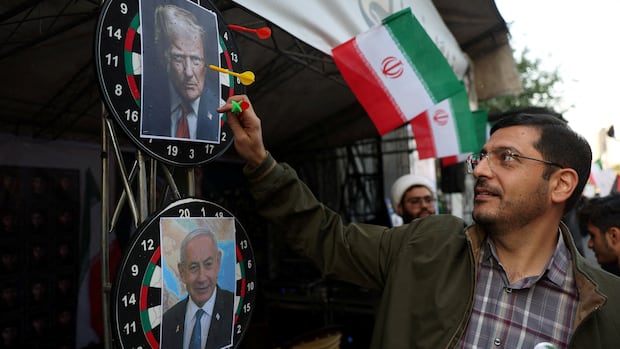
Protesters burned American and Israeli flags while chanting slogans such as “Death to America” and “Death to Israel.” Effigies of Trump and Netanyahu were displayed alongside caricatures depicting them, including one showing Trump as a vicious dog ready to attack, with Netanyahu holding its leash.
Tehran Mayor Alireza Zakani addressed the crowd, asserting that the United States and Israel had encountered a significant defeat, including in the midterm elections.
Zakani proclaimed, “The notable defeat of the United States and the Zionist regime in recent events and elections stems from the determination and strength of the Iranian nation,” and noted, “Even U.S. political adversaries have recognized that this setback is due to the ingenuity and resilience of the Iranian people.”
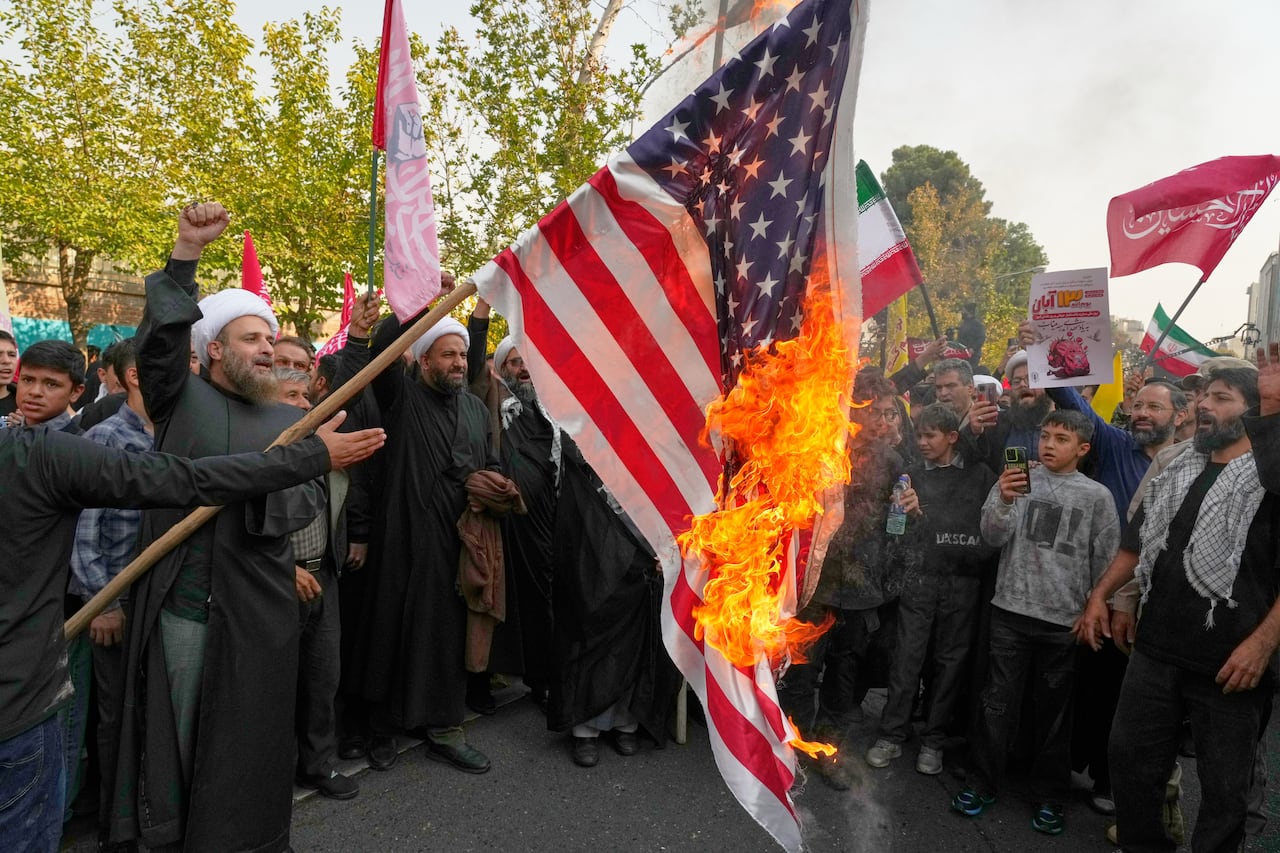
Demonstrators set fire to a U.S. flag during an annual rally commemorating the takeover of the 1979 U.S. Embassy in Tehran on Wednesday. (Vahid Salemi/The Associated Press)
On November 4, 1979, Iranian students invaded the U.S. Embassy, taking American diplomats and other citizens captive. Fifty-two Americans were held hostage for 444 days before their release on January 20, 1981.
This crisis solidified the rift between the two nations, which have lacked formal diplomatic relations for many years.
Gholam Hossein Mohseni Ejehi, the influential head of Iran’s hardline judiciary, associated the election outcomes with the war and the anniversary of the hostage crisis in a post on X.
Ejehi stated, “Trump has faltered both in warfare and in politics. We will undoubtedly deliver even more defeats to him.”
The U.S. and Israel initiated a war against Iran on February 28, resulting in the death of the country’s long-standing supreme leader, Ayatollah Ali Khamenei, and triggering a conflict that has disrupted global energy markets and maritime activities in the Strait of Hormuz.
Ongoing back-channel discussions
Discreet negotiations persist as Israel and certain Middle Eastern allies engage Trump.
U.S. Vice-President JD Vance remarked on Monday, prior to the emergence of news regarding the strikes in the Strait of Hormuz, that both he and Trump “feel optimistic about the potential for reaching a negotiated agreement.”
Before the recent strikes, the last confirmed U.S. attacks on Iran occurred in early September. Thousands of American troops continue to be stationed in waters near Iran to uphold a naval blockade aimed at stopping tankers carrying Iranian oil from accessing the global market. Another aircraft carrier and thousands of additional troops are en route to the Middle East.
Following the U.S. elections, Netanyahu advocated for a new round of strikes on Iran during a weekend discussion with Trump, according to two regional officials and a third individual familiar with the situation. These officials noted that diplomatic efforts had progressed, and mediators were working to establish a framework that would lead Iran to cease its attacks in the strait in exchange for the U.S. lifting its blockade.
The two officials requested anonymity as they were discussing classified briefings received from American officials and, in one instance, Israeli officials. The third individual, who was briefed on the conversation, also spoke on the condition of anonymity due to the sensitivity of the information.