

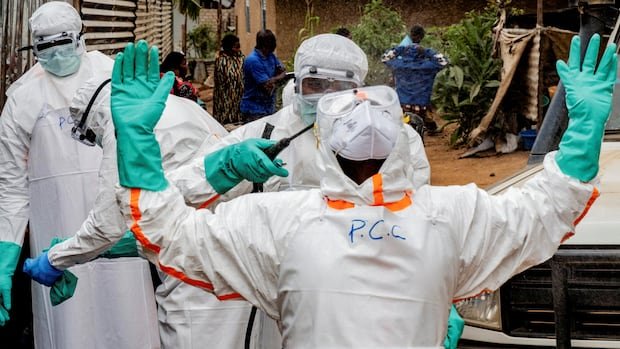

The latest data from the government of the Democratic Republic of Congo reveals that the Ebola outbreak has claimed the lives of 2,325 individuals, making it the deadliest in the country’s history, surpassing the toll of the 2018-2020 outbreak. The country’s public health institute reported that confirmed cases have now reached 4,945, with 101 new cases detected within the previous 24 hours. This outbreak, the 17th in the country, has already set a record for the highest number of cases ever recorded, a milestone achieved in late July.
The most recent government statistics indicate that the total number of fatalities has exceeded the 2,299 deaths registered during the Congo’s 2018-2020 outbreak, which was previously the worst in the country’s history. The outbreak has seen a total of 4,945 confirmed cases. Three months after its official declaration, this outbreak is second only in scale to West Africa’s 2014-2016 Ebola outbreak, where 28,616 cases and 11,310 deaths were reported in Guinea, Liberia, and Sierra Leone, according to the World Health Organization.
Unlike previous outbreaks, the current Ebola outbreak in the D.R.C. is caused by the Bundibugyo species of the virus, for which there are no approved vaccines or treatments available. The outbreak has been gaining momentum since it was declared on May 15, with weak health infrastructure, community resistance, and instability hindering efforts to identify and respond to cases effectively. The case fatality ratio, or the proportion of deaths after a confirmed infection, has risen from approximately 20% in early June to 46%, indicating that nearly half of confirmed cases are now fatal.
Experts emphasize that the increased fatality rate does not imply that the virus has become more lethal but rather highlights ongoing challenges in surveillance, case detection, and access to care. Despite ongoing evaluation of experimental vaccines and therapies, there is limited evidence from animal studies to support their effectiveness. The outbreak had previously spread to neighboring Uganda, where authorities successfully contained it, reporting only two deaths and 20 confirmed cases before declaring an end to the outbreak in that country.
Ebola is transmitted through direct contact with the bodily fluids of infected individuals, living or deceased, and can lead to symptoms such as fever, vomiting, diarrhea, and in severe cases, internal and external bleeding.