

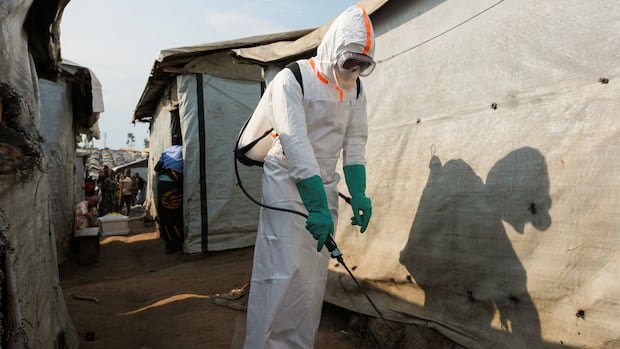

The recent Ebola outbreak in the Democratic Republic of Congo has become the deadliest in the country’s history, with a continually rising number of confirmed cases causing global concern. The country’s public health ministry reported a total of 2,378 deaths as of August 16.
Described by Tedros Adhanom Ghebreyesus, the head of the World Health Organization (WHO), as the second-largest Ebola outbreak ever recorded, the current situation is progressing at an unprecedented speed. Ghebreyesus emphasized that the epidemic is still far from being controlled and is moving swiftly compared to past outbreaks.
Ebola is a severe disease associated with orthoebolaviruses, with various strains affecting humans, including Zaire, Sudan, Taï Forest, and Bundibugyo. The current outbreak in the D.R.C. involves the Bundibugyo strain, marking the 17th outbreak in the country’s history.
The outbreak was officially declared in May and has primarily affected the eastern part of the D.R.C., near the borders with South Sudan and Uganda. The first suspected case was a health worker who reported symptoms in late April and subsequently passed away in Bunia, the capital of Ituri province.
The rapid spread of Ebola in this outbreak is a cause for concern, surpassing the pace of previous incidents. The number of cases reported in the D.R.C. has exceeded 5,000 as of August 16, with a significant concentration in Ituri province. The outbreak’s case fatality rate stands at 47.4%, and the rate of deaths has raised alarm among humanitarian aid officials.
Several factors complicate the response efforts, including the absence of a vaccine or specific treatment for the Bundibugyo strain, ongoing armed conflicts, mass displacement of populations, cross-border movements, and insufficient resources. Public distrust in government and healthcare interventions has also hindered containment efforts.
Improving testing, contact tracing, safe burial practices, isolation of patients, and deploying more healthcare workers are crucial steps to manage the outbreak. The WHO is intensifying its response by engaging local communities, increasing epidemiologists’ deployment, and expanding healthcare facilities. International support, including financial aid, is essential to prevent the further spread of Ebola beyond the affected region.