

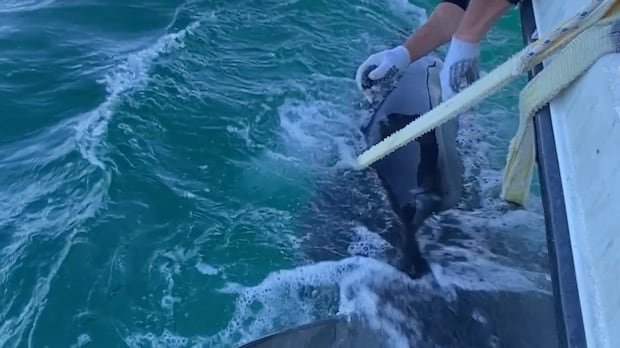

The appearance of Webster, a large white shark, off the coast of Newfoundland and Labrador indicates a recovering marine environment, as reported by a research organization monitoring shark movements in the Atlantic Ocean. Ocearch, a global non-profit dedicated to shark research, has observed several great white sharks in Newfoundland in recent times, including Webster, a 12-foot, 1,000-pound shark frequently seen near Cow Head beaches this summer.
According to Chris Fischer, the founder of Ocearch, these white sharks revisit specific areas in Newfoundland annually, indicating a consistent pattern of behavior for feeding purposes. Other white sharks named Dold and Monomoy have also been documented and tracked in the region over the years.
While the presence of great white sharks may evoke fear in some, Fischer views it as a positive development. He highlighted the drastic decline in the global great white shark population from the 1970s to the 1990s, with only about nine percent of the population remaining before conservation efforts were initiated to protect them.
Fischer emphasized that the return of sharks to the area is beneficial for local fisheries as sharks help regulate seal populations, thereby indirectly safeguarding fish stocks. Caroline Miri, a marine biologist at Fisheries and Oceans Canada, underscored the vital role sharks play in maintaining marine ecosystems by controlling invasive species and balancing fish populations.
Ocearch has tagged approximately 115 sharks from Florida to Newfoundland and Labrador, aiming to monitor their movements and behavior. Webster, initially tagged in September 2025 in Nova Scotia, was last tracked near Cow Head on August 7. Fischer reassured that encountering sharks like Webster should not be a cause for alarm as long as appropriate safety measures are followed.
In conclusion, the resurgence of white sharks in Newfoundland signals positive changes in ocean health and wildlife management efforts. Fischer described these apex predators as essential components of the marine ecosystem, emphasizing the need to appreciate and protect these “lions of the ocean.”