

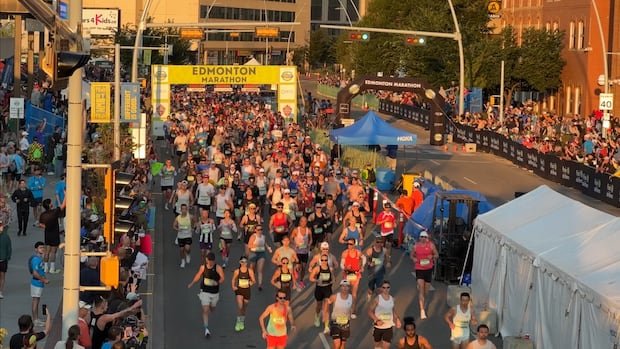

The race director overseeing the Edmonton Marathon has confirmed the accuracy of the race routes, despite numerous runners expressing dissatisfaction online, claiming that the distances were longer than expected.
In a statement released to the media, Tom Keogh stated that both the half and marathon courses had been certified and measured by highly qualified professionals in road race measurement. The course measurer was present on race day to verify the accuracy of the measurements.
Keogh explained that due to construction, there were some course adjustments, which led to discrepancies between the official race distances and the measurements recorded by the runners’ GPS devices. He clarified that when participants had to change lanes or navigate around construction zones, the additional lateral distance covered was not factored into the certified course measurement, following standard road race measurement practices.
It was also highlighted that World Athletics and Athletics Canada acknowledge and accept a variance of up to 1% in road races. Chris Winter, the director of domestic programs and safe sport at Athletics Canada, expressed confidence in the Edmonton Marathon’s course measurement and certification process, emphasizing the established physical measurement methodology used for certified road race courses.
Following the race, Olympian Natasha Wodak, who participated in the half marathon national championship, noticed discrepancies in her finishing time and raised concerns about the course length. She emphasized the frustration caused by inaccurate courses, not only for elite runners but for all participants striving for personal achievements and spending money on race entry fees.
Additionally, other runners, including Roy Narten and Brittney White, shared similar experiences of suspecting the course was longer than expected during the race. Narten, a seasoned marathon runner, highlighted the impact of the extra distance on runners aiming for personal bests or Boston Marathon qualifications, stating that the discrepancy could deter some participants from running the race in the future.
The marathon winner, Rory Linkletter, mentioned that doubts about the course accuracy affected his performance during the race, preventing him from pushing himself to pursue a course record. Linkletter compared this year’s route to the previous year’s and noted concerns about the turnaround point not being adjusted adequately to accommodate a route detour.
In response to participants’ feedback, Keogh emphasized that race organizers value the input and are dedicated to maintaining the highest standards in their operations.