

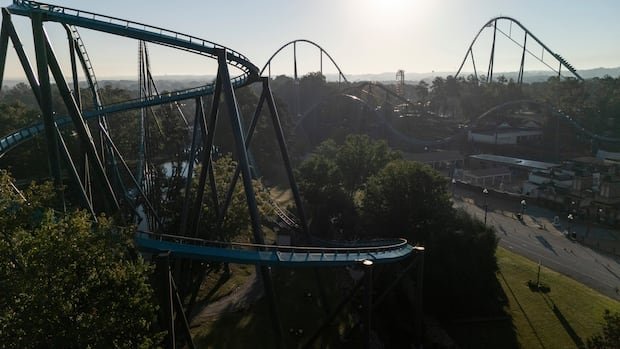

Canadians can rest assured that riding roller-coasters remains safe despite a recent fatality at a U.S. Six Flags amusement park, as accidents of this nature are exceptionally uncommon, experts inform CBC News. Law enforcement reported the tragic incident where a 42-year-old man lost his life on the Goliath roller-coaster at Six Flags Over Georgia in Mableton, Ga., after being ejected from his seat, hitting other riders, and landing below the ride. Multiple individuals sustained injuries in the incident.
As a precautionary measure, Six Flags Entertainment Corp. disclosed the closure of nine similar roller-coasters across six North American parks, including two at Canada’s Wonderland near Toronto and one at Montreal’s La Ronde amusement park. Doug Perovic, a materials science and engineering professor at the University of Toronto, shared his experience of riding the same Goliath coaster at California’s Six Flags Magic Mountain numerous times with his son and expressed confidence in its safety standards.
Perovic highlighted the rarity of roller-coaster accidents, emphasizing the rigorous inspection and maintenance procedures in place to ensure rider safety. Investigating the recent incident, experts are focusing on potential failures in the restraint system, considering factors such as manufacturing defects or lapses in inspection protocols.
Kathryn Woodcock, a professor at Toronto Metropolitan University’s School of Occupational and Public Health, explained the complexity of roller-coaster safety systems, emphasizing the stringent standards and inspection programs set by manufacturers. She noted the built-in testing and redundancy within ride automation systems to prevent component failures.
Despite high-profile incidents, such as the West Edmonton Mall’s Mindbender accident in 1986 and the Texas Giant incident in 2013, where safety enhancements were made post-accident, such occurrences are rare. Statistics from the National Safety Council indicate a low probability of serious injuries on fixed-site amusement rides, with most incidents attributed to guest-related factors.
Woodcock underscored the collaborative efforts of regulatory authorities in Canadian provinces to ensure communication and safety standards across amusement parks. She asserted that safety is a top priority in the attractions industry, with a transparent approach to maintaining high safety standards.
While accidents are infrequent, there are concerns about the risks posed by extreme rides, prompting caution from experts like Perovic. Highlighting incidents involving severe injuries and fatalities on certain coasters, he advised individuals to consider their health conditions before embarking on extreme rides due to the intense forces involved.
In conclusion, safety remains paramount in the amusement park industry, with continuous efforts to enhance ride safety and minimize risks associated with thrill rides.