


Days following the breakdown of trade negotiations with the Trump administration, the Liberal government unveils a $7.5 billion aid package to assist workers and businesses in coping with the newly imposed 50% tariffs on $27.6 billion worth of Canadian goods by the U.S. President.
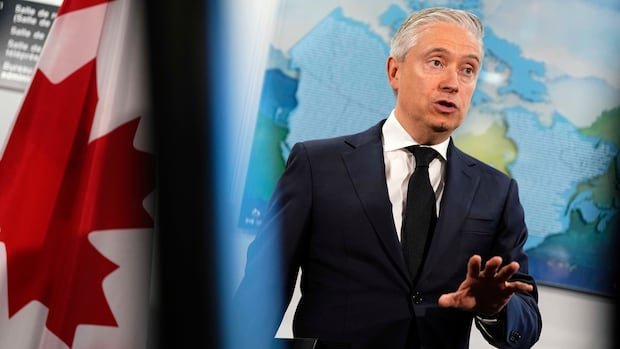
Finance Minister François-Philippe Champagne, alongside other ministers, revealed on Tuesday that starting September 8, they will mirror the U.S. levies by applying equivalent tariffs on $27.6 billion worth of similar U.S. products. This move aims to safeguard workers, farmers, families, and businesses while enhancing the resilience and diversity of the Canadian economy.
The support package, layered on top of the nearly $25 billion in existing tariff aid over the past year and a half, is strategically constructed to offer targeted assistance to workers and businesses, with a specific focus on small and medium enterprises nationwide.
Under the aid initiative, the Liberal government allocates $3.5 billion of the total support fund towards a swift response program for workers and employers. This includes extending existing Employment Insurance (EI) benefits, such as waiving the one-week waiting period, allowing workers to receive EI without depleting separation payments, and granting additional EI weeks to long-tenured employees.
New measures in the aid package involve enabling voluntarily departed workers to receive EI benefits without penalties and facilitating job connections for unemployed or underemployed individuals with projects in need of staffing. Employers are also eligible to receive up to $1,000 per employee to cover training and administrative costs for implementing EI work-sharing and retention programs.
Additionally, the government is injecting $2 billion to establish the Canada Strong Diversification Fund, supporting companies affected by tariffs with capital maintenance projects. Large enterprises will benefit from enhanced flexibility through modifications to the Large Enterprise Tariff Loan facility (LETL), extending the financial liquidity period to 36 months and increasing the maximum loan repayment duration to 15 years.
Medium-sized companies across the nation will gain access to an extra $1.5 billion in funding, distributed through regional development agencies. Notably, non-repayable contribution caps are raised to $3 million, and liquidity support is extended up to $2 million.
The Business Development Bank of Canada will administer a secondary $500 million liquidity stream to offer working capital support for small- and medium-sized businesses facing cash flow challenges. Eligible companies directly impacted by tariffs can secure loans ranging from $250,000 to $5 million, with the option for interest-only payments over 36 months.
Canada’s retaliatory tariff strategy will mirror the U.S. imposed Section 338 and 232 tariffs, targeting over 700 products. These tariffs are aimed at shielding Canadian industries rather than generating revenue, aligning Canada’s tariff rates with the U.S. rates on corresponding products to uphold domestic interests.