

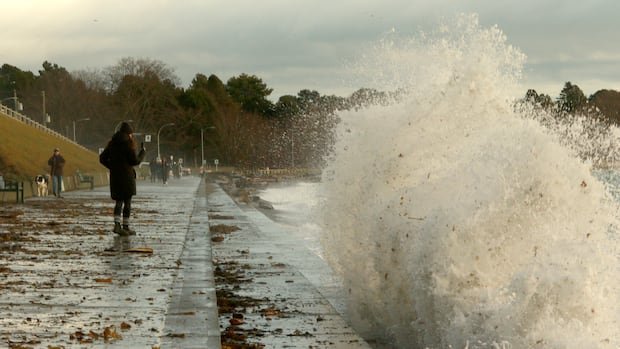

A massive underwater wave linked to this year’s El Niño weather pattern is making its way up the western coast of the Americas, sparking concerns among researchers about how climate change is amplifying the effects of this natural phenomenon.
Known as the Kelvin wave, this occurrence is not entirely surprising. However, it is occurring against the backdrop of human-induced climate change, which has already heated up both the oceans and the atmosphere.
A preliminary wave reached British Columbia earlier this summer, and another one is anticipated to arrive in the next one to two weeks, as stated by Bill Merryfield, a research scientist at Environment and Climate Change Canada.
The Kelvin wave is a naturally occurring weather event, similar to El Niño itself. During normal periods, winds blow from the east to the west along the equator in the Pacific Ocean, typically pushing water from South America toward Asia.
In El Niño years, these east-to-west winds weaken or reverse, enabling the water to move eastward. Once these Kelvin waves hit the South American coast, they disperse and travel along the coasts of the Americas, eventually reaching as far as Canada.
Data from sea-level monitoring at Tofino on Vancouver Island’s Pacific coast demonstrates the impact of the previous Kelvin wave in June. Instead of a massive tsunami-like wave, the Kelvin wave temporarily elevates sea levels.
According to University of California climate scientist Daniel Swain, it can be likened to a broad, shallow swell in the ocean surface, extending hundreds of miles wide and rising by about a foot.
The repercussions on the West Coast are most noticeable during king tides, particularly high tides resulting from the combined gravitational forces of the sun and moon.
The combination of the Kelvin wave, intensified northward winds, winter storms, and the influence of climate change on sea levels and extreme weather could exacerbate flooding and erosion along the coast. Previous strong El Niños have caused widespread erosion on California’s beaches.
Local authorities are taking preventive measures by placing emergency sand on beaches, as they anticipate the Kelvin wave to raise water levels by six to 12 inches, according to the Associated Press.
Merryfield cautioned that the effects of the Kelvin wave and El Niño could extend beyond the current season. During El Niños, some of the excess heat stored in the oceans due to greenhouse gases is released into the atmosphere, potentially leading to 2027 being the warmest year on record by a significant margin.
Various climate organizations and scientists have echoed similar warnings about the impact of El Niño on global temperatures and weather patterns.