

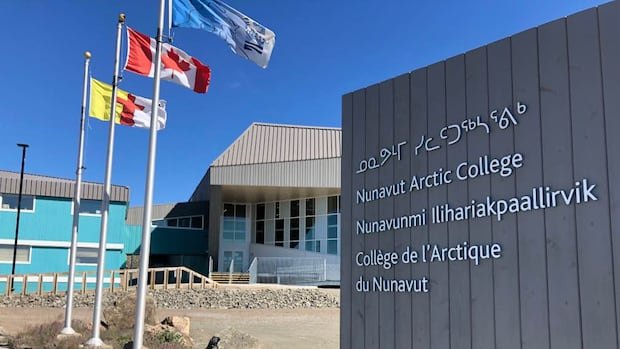

Nunavut Arctic College is enhancing its scientific research lab with a $600,000 grant from ArcticNet’s North-by-North Program. The funding, running until 2029, is part of a larger $9.3 million allocation for Indigenous and Northern research projects in Inuit Nunangat and the wider North.
Jamal Shirley, the director of innovation and research at Nunavut Research Institute, emphasized that the funds will support the lab’s expansion. The key focus areas include enhancing parasite detection capabilities, upgrading the online research license portal, and developing training modules for ethical research practices and community engagement.
Shirley highlighted Nunavut’s appeal to global researchers and emphasized the college’s role in preparing Nunavummiut for research collaborations while promoting responsible and respectful research practices. The Nunavut Research Institute stands out as one of the few Arctic labs equipped to process DNA samples, assess water quality, monitor plant and animal health, and conduct wildlife parasite testing.
The institute’s core work involves testing for trichinella in wildlife and monitoring mercury levels, crucial for public health in the North. Trichinella, a harmful roundworm, poses health risks when consumed, while mercury accumulation in the Arctic food chain can impact child development in northern communities.
With the funding, Arctic-based researchers will convene in Ottawa next month to share project insights and explore future collaborative opportunities. Shirley emphasized that the support from ArcticNet’s Northern Research Leaders program strengthens research capabilities and fosters new partnerships, benefiting college students, staff, faculty, and Nunavummiut.
ArcticNet, supported by the federal Strategic Science Fund, aims to connect scientific research with Indigenous knowledge. Scientific director Philip Archambault stressed the importance of directly funding researchers and communities in the North to address climate change and other challenges effectively.
Besides Nunavut Arctic College, other projects receiving support include mobile weather stations in Inuvialuit communities, documenting Inuit knowledge of Nunavik beluga for sustainable harvesting, and studying coastal erosion in Jones Sound.