

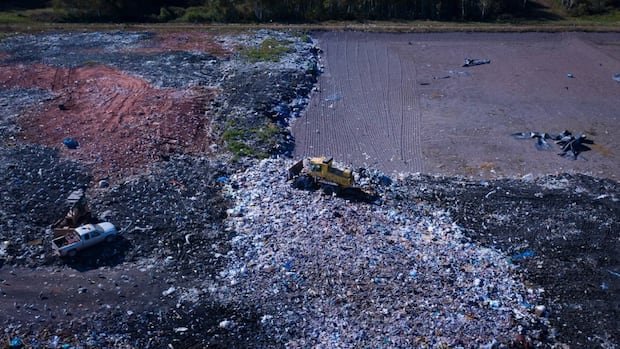

Prince Edward Island (P.E.I.) stands out as the province with the lowest per capita waste generation in Canada, according to the latest waste disposal data released by Statistics Canada. The data, collected biennially, reveals that in 2024, Islanders produced significantly less trash per person compared to the national average, amounting to about two-thirds less.
Maxime Gaudet, overseeing Statistics Canada’s waste management survey, highlighted P.E.I.’s sustained success in waste reduction practices. This achievement is attributed to the province’s enduring commitment to diverting waste from landfills and incineration in favor of recycling and composting initiatives.
Heather Myers, the director of operations at Island Waste Management Corporation, credited the province’s effective waste management to the long-standing Waste Watch program. Established over two decades ago, Waste Watch is a mandatory sorting program implemented uniformly across P.E.I., unlike the varied programs in other regions and municipalities.
In 2024, while the national average waste disposal per person in Canada stood at 667 kilograms, P.E.I. recorded a significantly lower figure of 336 kilograms per person, marking an impressive 66% reduction. Comparatively, P.E.I.’s disposal rate was notably lower than Alberta, which had the highest landfill waste level at 840 kilograms per person.
The success of P.E.I.’s waste management strategies, particularly in diverting waste from landfills, is attributed to a strong culture of composting. P.E.I. was a pioneer in implementing composting collection initiatives nationwide, with impressive composting and recycling rates per person in 2024.
Despite the island’s commendable waste reduction efforts, the total waste sent to landfills in P.E.I. has seen a slight increase, primarily attributed to population growth. Myers emphasized the importance of continued waste sorting efforts to prolong the lifespan of the existing landfill and protect the environment.
Looking ahead, the focus in P.E.I. remains on enhancing waste sorting practices to further reduce landfill waste. Myers highlighted the positive reception of the Waste Watch program among residents and expressed the need for ongoing improvements in waste sorting behaviors to ensure sustainable waste management practices and environmental stewardship.