

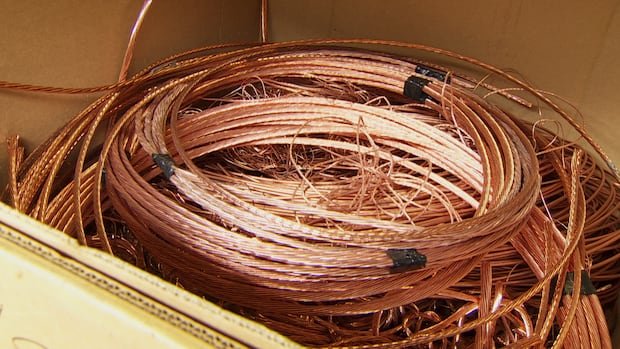

Politicians are calling on both provincial and federal authorities to address the issue of copper theft following multiple instances of internet and cellphone service disruptions affecting thousands of individuals in the northwest region of British Columbia since May. The disruptions, attributed to copper thieves, led to outages impacting cellphone, internet, and 911 services in northwest B.C.
The first incident occurred on May 4 when a failed attempt to steal copper cables near Burns Lake disrupted Telus operations, leaving many without digital communication capabilities. Subsequently, on August 2, Telus services were once again interrupted due to cable damage caused by thieves in the Mount Hayes area along Highway 16. Another outage on August 11 affected CityWest internet and television services, coinciding with suspected copper theft in Alberta and damage to a backup telecommunications line due to a wildfire in B.C.’s Interior.
These outages, which affected a significant portion of northwest B.C. and even impacted services in southern Alaska, have raised concerns among politicians who view them as a serious threat to critical infrastructure and public safety. Skeena MLA Claire Rattée recently urged the Ministry of Citizens Services to enhance telecommunications redundancy in the region to mitigate risks to residents, businesses, and emergency services. She emphasized the need for collaboration between the province and telecom providers to establish backup routes and ensure uninterrupted connectivity.
Rattée highlighted the vulnerability of relying solely on a single fiber-optic line for communication and stressed the importance of implementing secondary transmission routes, redundant infrastructure, and alternative technologies to enhance resilience. She emphasized the necessity of prioritizing these measures to prevent widespread disconnections from communication services due to a single point of failure.
In response to these incidents, a report from the Standing Senate Committee on Transport and Communications recommended imposing stricter penalties for metal theft and regulating the sale of scrap metal at the provincial and territorial levels. The report also proposed the establishment of a federal task force on metal theft to facilitate information sharing among law enforcement agencies.
Alberta Sen. Paula Simons emphasized the importance of addressing metal theft, especially during times of environmental crises when timely information dissemination is crucial for public safety. The recent enforcement of Bill C-14, which increases penalties for crimes affecting critical infrastructure, aims to deter offenders and enhance accountability. However, the effectiveness of penalties hinges on apprehending the perpetrators.
The Ministry of Citizens Services in B.C. acknowledged the severity of the outages and the significance of reliable connectivity for the region. Efforts are underway to develop physically diverse transport routes along Highway 37 and Highway 97 to establish alternative pathways for services along the Highway 16 corridor, ensuring long-term solutions to prevent similar disruptions in the future.