

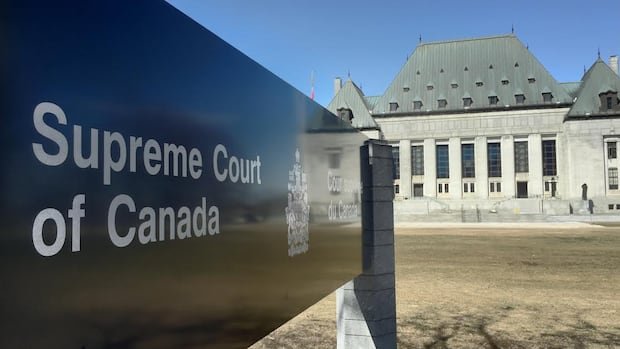

Canada’s highest court has not yet made a decision in a case involving two individuals from Nova Scotia that could have significant implications for incarcerated individuals nationwide. Durrell Diggs and Ryan Taylor Wilband were inmates at the Central Nova Scotia Correctional Facility, commonly referred to as the Burnside jail in Dartmouth, Nova Scotia. During their time at the facility, a shortage of staff led to extended periods where inmates were confined to their cells for up to 23 hours a day.
Both Diggs and Wilband contended that the prolonged lockdowns without a clear endpoint infringed upon their constitutional rights. They initiated habeas corpus actions through the legal system. In 2024, Justice Peter Rosinski of the Nova Scotia Supreme Court ruled that the rights of Diggs and Wilband were violated by the prolonged cell confinement. While he deemed the lockdowns unlawful, he did not order their release from custody.
Subsequently, the conditions for both men improved. Diggs was transferred to a different provincial jail in Pictou County, where staffing levels allowed for more time outside the cell. At the same time, staffing levels at the Burnside jail had also improved, enabling Wilband to have increased time outside his cell.
The government’s legal representatives argued that the improved conditions rendered the habeas corpus applications irrelevant and suggested they should not proceed. They contended that applying habeas corpus to a broad issue like staff shortages affecting all inmates at the jail, rather than just the two individuals who initiated the legal action, was inappropriate.
In a ruling in March 2025, the Nova Scotia Court of Appeal concurred with this argument. The court asserted that habeas corpus was not the appropriate avenue to address the jail lockdowns and that the initial judge had overstepped his authority in favoring the inmates’ applications. This decision formed the basis for the appeal heard by the Supreme Court of Canada.
Numerous intervenors, including the Attorney General of Canada and the attorneys general of British Columbia, Saskatchewan, and Ontario, participated in the case due to its significance. Additionally, six prisoners’ rights groups and two civil liberties associations, along with other organizations, provided input.
The legal representatives for Diggs and Wilband argued that the Nova Scotia Court of Appeal’s decision created a “technical exception” to habeas corpus jurisdiction for operational reasons. They labeled this exception as “dangerous and unwarranted” in their submission to the Supreme Court of Canada. Conversely, the provincial attorney general’s lawyers contended that the inmates were attempting to use the legal system to alter the correctional facility’s overall operations through declaratory and Charter relief, which was beyond the scope of habeas corpus.
Following a full day of arguments, the Supreme Court panel has reserved its judgment, with no specific timeline provided for the decision’s release.