

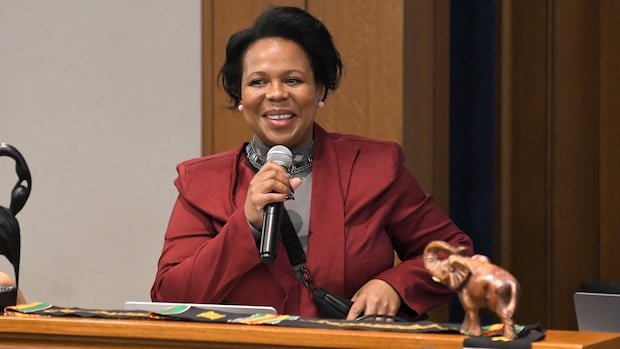

To a Black woman in Nova Scotia, participating in discussions to influence the global declaration on the rights of people of African descent signifies a significant moment. Lerato Chondoma, the associate vice-president of equity, diversity, inclusion, and anti-racism at Acadia University, expressed her belief that the current state of affairs must change.
Chondoma collaborates with the United Nations in crafting a fresh international declaration on the rights of people of African descent. In an interview with CBC News, she emphasized the urgent need to address systemic inequalities on a worldwide scale. Reflecting on her family’s experiences with racism in apartheid-era South Africa and her children’s encounters with racism in Canada, Chondoma stressed the necessity for progress.
The Black Canadian Civil Society Coalition and Amnesty International Canada organized meetings with UN delegates during their recent visit to Canada, including a session in Wolfville, Nova Scotia. They released a report outlining the outcomes of these discussions, which highlighted the need for actions at the national level.
The report recommended the establishment of an independent Black equity commissioner, acknowledgment of the collective rights of historic Black communities, and the promotion of education about Black history and identity. It also addressed ongoing issues such as the Africville displacement and environmental racism in Shelburne, Nova Scotia.
Andrea Davis, the executive director of the Black Loyalist Heritage Centre in Shelburne, attended the consultations earlier this year. As an eighth-generation descendant of Black Loyalists, she was pleased to see the report incorporating the perspectives of Black Nova Scotians living in rural areas, illustrating the distinctions in lived experiences compared to other groups and urban settings.
Davis expressed her excitement, noting that she feels a sense of responsibility to carry on the journey that her ancestors could not complete. She highlighted the importance of continuing the conversations sparked by the report for future generations.
Chondoma, who also serves as a director with the coalition, emphasized that the responsibility now lies with the UN and the Canadian government to implement the report’s recommendations. At a press conference in Ottawa, she underscored the trust and effort invested by Black communities in the consultation process, urging the government to act on these recommendations promptly.
Ketty Nivyabandi, the secretary general for Amnesty International Canada’s English-speaking section, stressed the significance of ensuring that the voices of Black Canadian communities contribute to shaping the new declaration on the human rights of people of African descent. She highlighted the pivotal role that Indigenous voices played in the United Nations Declaration on the Rights of Indigenous Peoples, emphasizing the importance of inclusive representation in shaping international declarations.
The collaborative efforts of Black communities, UN representatives, and advocacy organizations aim to drive meaningful change and address long-standing issues of systemic racism and discrimination. The commitment to amplifying marginalized voices and advocating for equity and justice remains at the forefront of these discussions.