

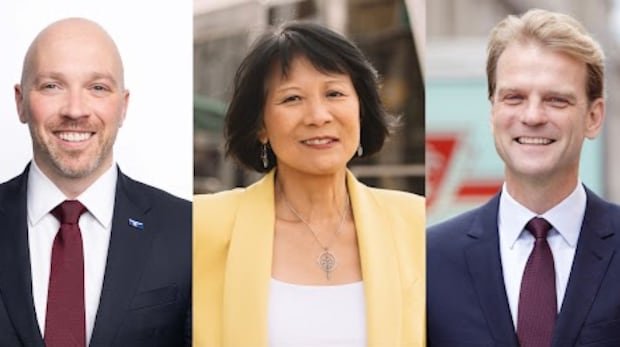

Leading candidates for Toronto mayor are discussing strategies to back local businesses during the ongoing tariff conflict between Canada and the U.S. Mayor Olivia Chow and Councilor Brad Bradford each held press briefings recently following the initiation of U.S. tariffs on $28 billion worth of Canadian goods. Chow highlighted the city’s success in prioritizing local purchases, with 98% of expenditures in 2026 directed to Canadian firms. In 2025, Chow’s administration prohibited U.S. companies from city contracts as part of an economic action plan during the initial wave of American tariffs.
Chow emphasized the city’s commitment to buying and sourcing locally, utilizing its substantial operating and capital budgets for this purpose. Meanwhile, Bradford proposed a 25% tax reduction for businesses, a measure he previously introduced but failed to pass in the city council. He criticized Chow’s tax deferral program, arguing that it falls short in signaling a competitive attitude towards attracting business investments and talent.
Bradford pledged to implement a permanent tariff response mechanism at city hall to streamline support for affected businesses. He suggested leveraging the city’s tax stabilization reserve to offset potential revenue losses from his proposed tax cut. Bradford also promised to provide a dedicated support table to aid businesses in navigating relief programs and tariff regulations.
While both candidates advocate for supporting local enterprises, they differ in their specific approaches. Chow’s economic action team, established last year, focuses on counter-tariff strategies, although Bradford contends that it lacks consistent engagement with local businesses. Bradford’s proposal includes a concierge service to ensure that all Toronto employers access available provincial and federal relief funds promptly.
In a bid to further boost local businesses, both candidates are championing campaigns to encourage residents to choose Canadian products and services. Chow highlighted the “love local” initiative, urging Torontonians to opt for domestic goods. Bradford vowed to prioritize Toronto and Canadian businesses, inviting residents to nominate their favorite local establishments for his campaign promotion.
Another contender in the mayoral race, Chris Alexander, outlined his plan to enhance economic development and employment growth programs, including property tax exemptions for businesses over five years. Alexander aims to refine existing city initiatives by introducing a loan guarantee program for small enterprises and adjusting the commercial-to-residential property tax ratio.
Recent polling data from Liaison Strategies show Chow leading the mayoral race with 49% support, followed by Bradford at 38% and Alexander at 11%. The survey, conducted from August 14 to 16 with a sample of 1000 Torontonians, indicates the current standings in the mayoral contest.