

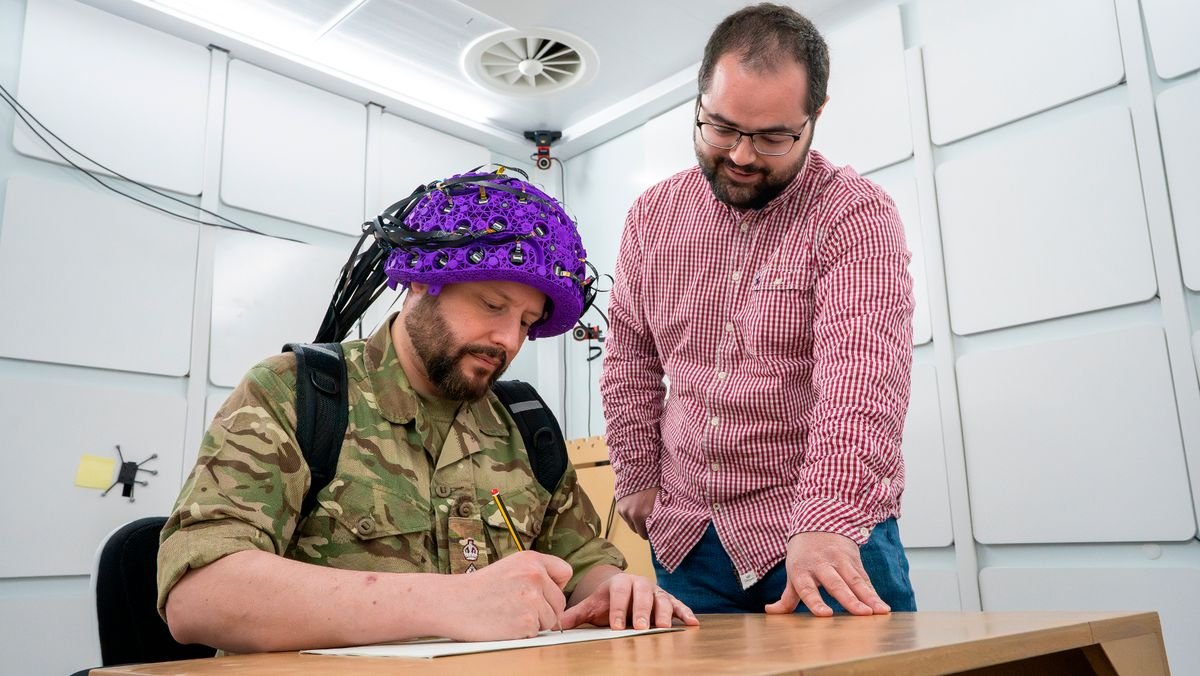

British military personnel will soon have access to mobile battlefield brain scans following exposure to combat blasts or explosions in training. UK scientists are developing the world’s first mobile head scanner to evaluate the impact of bomb exposure on soldiers, sailors, and air personnel.
Thousands of troops could suffer brain damage from blast waves generated by British military weaponry. While the immediate effects of blasts on the brain may dissipate shortly after the incident, there can be long-term adverse consequences, necessitating the use of a mobile unit.
The Ministry of Defence (MoD) has acknowledged that weapons systems can cause mild Traumatic Brain Injury (mTBI). Lt Col James Mitchell highlighted the shift in understanding, noting that in recent years, the focus has expanded to include the effects of low-level blast exposure from their own weapon systems on service personnel.
The innovative scanning machine, costing £3.1 million, is expected to be operational by March 2026. It will utilize magnetoencephalography to monitor brain function immediately after blast exposure, enabling researchers to observe how troops recover, potentially revolutionizing protective measures for military personnel.
The mobile scanner will be deployed to military firing ranges, field hospitals, and rehabilitation centers, facilitating evidence-based decision-making to safeguard service members from potential harm. The project, led by the University of Nottingham’s Cerca Magnetics and the Defence Medical Services, aims to understand the effects of blast exposure through collaboration with leading scientists.
Minister for Veterans and People, Louise Sandher-Jones MP, emphasized the significance of this technology in detecting subtle physical changes and enhancing decision-making to protect military personnel. Lt Col James Mitchell hailed the transformative impact of the new system in researching the effects of blast exposure on personnel, providing real-time insights into brain function post-exposure.
Professor Matthew Brookes, a pioneer in this technology, highlighted the system’s versatility and potential impact beyond military applications, foreseeing its use in assessing neurological conditions and sports-related concussions. The mobile system is set to revolutionize research and healthcare practices, with an anticipated operational date of March 31, 2026.