

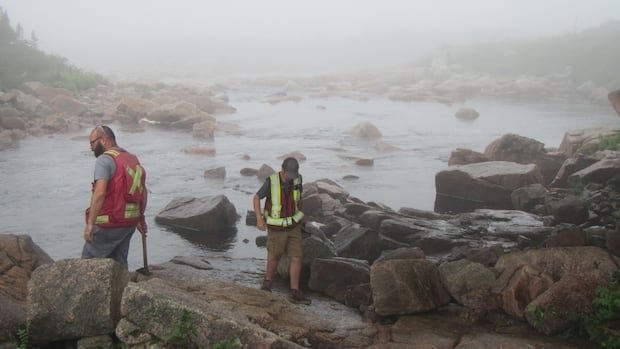

Amidst escalating wildfire seasons, Newfoundland and Labrador are grappling with growing concerns for public safety and disruptions to routine operations in rural areas, particularly impacting vital geoscience activities crucial for the mining industry.
Wildfires are rendering work sites inaccessible on a daily basis due to safety hazards, necessitating the diversion of aircraft used to transport scientists to rural and remote locations for their fieldwork to assist in firefighting efforts.
This scenario has significantly increased the workload for scientific program directors, requiring meticulous planning, scheduling, and rescheduling. Despite these challenges, the province’s Energy and Mines Minister, Lloyd Parrott, assures that the necessary work is progressing.
In the previous year, the actual transportation expenditure by the Government of Newfoundland and Labrador for geophysical surveys conducted by the Geological Survey fell $321,800 below the budgeted amount, primarily attributed to reduced helicopter usage caused by unavailability stemming from wildfire-related issues.
While geoscientists sometimes employ drones for fieldwork, the nature of their tasks often demands physical sample collection and activities beyond the capabilities of drone technology. Helicopters are indispensable, especially in accessing remote areas like Labrador, although their operations can be hampered by adverse weather conditions and wildfires.
Acknowledging the impact of wildfires on geoscience fieldwork, Minister Parrott confirmed the reassignment of helicopter resources to aid in wildfire suppression efforts this summer, though the disruption was less severe compared to the previous year.
Despite the challenges posed by wildfires, ongoing projects, including joint ventures with the federal government, are progressing. Notably, the Geological Survey of Newfoundland and Labrador is currently overseeing ten active field projects, with a focus on both Newfoundland and Labrador regions. Additionally, there are plans for two airborne surveys utilizing fixed-wing aircraft as part of the scientific program.
The work conducted by the Geological Survey holds immense value for the industry, providing critical data that aids in investment decisions, project de-risking, capital improvement, land use planning, and the acceleration of potential discoveries. Mining Industry N.L. executive director, Amanda McCallum, emphasized the importance of supporting these efforts to foster industry growth.
Despite the challenges, private exploration spending in the province has reached record highs, with projections indicating a substantial increase from the previous year. McCallum highlighted the significant economic impact of these investments, contributing to job creation and attracting foreign direct investment.
Notwithstanding wildfire disruptions, the mining industry has demonstrated resilience in adapting field operations to mitigate delays or modifications in project timelines. McCallum commended the sector’s flexibility in managing these challenges, noting that planned work has largely proceeded despite the wildfire impacts.
Mining remains a key economic driver in Newfoundland and Labrador, supporting 11 active mines and providing employment for approximately 8,920 individuals, including those engaged in exploration activities. As of the latest update, the wildfire risk level across the province was reported as low, with only a few active fires in certain regions, indicating an overall improvement compared to the previous year.
The ongoing wildfire situation underscores the importance of monitoring and managing environmental risks, particularly in regions critical to vital industries like mining.