

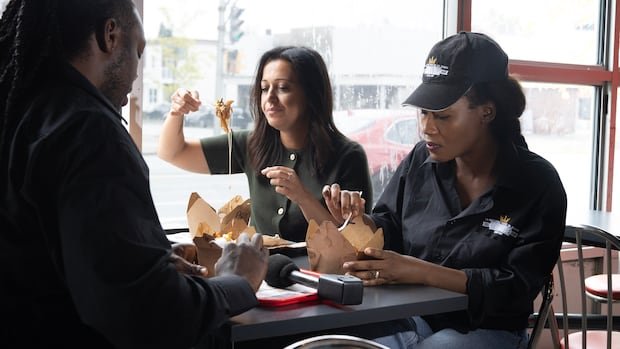

Days into Quebec’s election campaign, Ruba Ghazal disembarked from the Québec Solidaire campaign bus in Rouyn-Noranda, Quebec, and made her way to Chez Morasse, a popular restaurant renowned for its poutine. The party’s co-spokesperson indulged in a generous serving of poutine before joining a table where she sat alongside the restaurant managers and local QS candidate, France Marion. Instead of heading directly to her seat, Ghazal engaged in conversations with customers, addressing queries from a group of teenagers about her party’s platform on combating the high cost of living, housing issues, and improving education.
According to political analyst Antonine Yaccarini, these impromptu stops are a crucial element of an election campaign, allowing politicians to connect with voters in a more relaxed setting. Ghazal, like other party leaders, leveraged the cultural significance of poutine during the campaign. Christine Fréchette, leader of the Coalition Avenir Québec, followed suit by visiting Ti-Oui Snack Bar in Saint-Raymond to interact with customers and serve the iconic dish.
Yaccarini highlighted the strategic selection of locations by campaign teams to target specific ridings and capture compelling visuals. She emphasized the role of food in demonstrating politicians’ relatability to the public, a tactic frequently employed during election seasons in Quebec. Food columnist Charles-Alexandre Théorêt likened election campaigns to a “seduction operation,” emphasizing the symbolic importance of food in signaling authenticity to voters.
The use of food to shape a politician’s image is a longstanding practice, evidenced by historical examples such as Quebec Premier Robert Bourassa’s iconic hotdog moment in 1975. Théorêt explained how such culinary gestures can humanize politicians but also carry risks, as demonstrated by Conservative Leader Pierre Poilievre’s pizza mishap during a campaign event in 2025.
In Quebec’s political landscape, cultural nuances play a significant role, as exemplified by Liberal Leader Mark Carney’s cheese curd mishap during the same campaign. Théorêt emphasized the importance of politicians understanding and respecting local customs to effectively connect with voters.
Ultimately, the strategic use of food, particularly Quebec’s iconic poutine, in election campaigns aims to convey a sense of shared identity and values between politicians and voters. While authenticity is key in such public relations efforts, any perception of insincerity or staged gestures can undermine the intended message.