

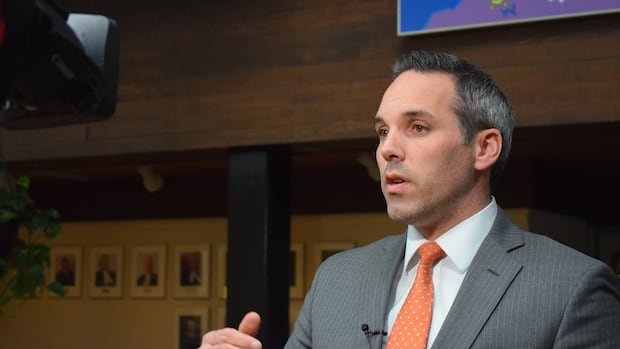

Yukon Premier Currie Dixon announced on Tuesday that tenants impacted by the removal of the rent cap and the reintroduction of no-cause evictions will have to rely on existing rental subsidies. Dixon’s government recently proposed amendments to the Residential Tenancies Act in the territory, abolishing the temporary rules that restricted rent hikes to inflation rates during the pandemic. Dixon mentioned that the current federal-territorial housing subsidy for low- and middle-income families will be the main support available.
Regarding potential changes, Dixon stated, “We have no immediate plans for further alterations. We recently raised [the subsidy] this summer. If there is a need for additional adjustments, we are open to considering them, but currently, no changes are planned.” The amendments to the Residential Tenancies Act are set to come into effect as early as December 1, pending the bill’s approval, which is highly likely due to the Yukon Party’s majority in the Legislative Assembly.
The government argues that these changes will encourage private-sector investments in rental properties, leading to an increase in available rental housing in the long term. However, critics, including housing advocates and opposition members, believe that these changes will negatively impact renters already struggling with rising energy expenses and an overall cost-of-living crisis.
Kristina Craig, the executive director of the Yukon Anti-Poverty Coalition, emphasized the importance of ensuring current renters can afford to remain in their homes amidst the removal of the rent cap. NDP Leader Kate White suggested maintaining the rent cap to address the situation, criticizing the new tenant subsidies as a way for the Yukon Party to indirectly support landlords. White also raised concerns about the full utilization of the existing rental subsidy program, a claim disputed by Helen Christiansen from the Yukon Housing Corporation.
Recent data from the Yukon Bureau of Statistics revealed that rent increases closely matched inflation rates for the year ending in April 2026. The median rent increased by 3.6% to $1,527 per month, aligning with a 3.2% rise in the consumer price index. Despite a rental vacancy rate of 2.4% in the territory, with only 57 vacant units in total, the scarcity of available rentals suggests a potential spike in rents once rent control measures are lifted. Even with support for the end of rent control, Lars Hartling, the head of the Yukon Residential Landlords Association, advised landlords to approach rent increases thoughtfully and not solely based on market rates.
For more details, please refer to the original article.