

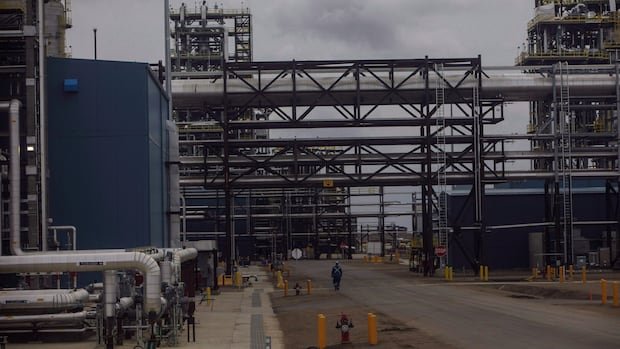

Alberta Premier Danielle Smith reassures that the province’s oil sector is not immediately threatened by the recent agreement that allows the United States access to a substantial amount of Venezuelan oil. Smith, speaking at a news conference in Calgary, highlighted the advantages of Alberta’s oilsands infrastructure and logistics compared to Venezuela, which is currently producing approximately 1.1 million barrels of oil per day, significantly less than Alberta’s production of five million barrels daily.
Smith emphasized the importance of the West Coast oil pipeline to expand market reach into Asia, citing analyses that suggest Venezuela faces significant challenges in increasing production to 1.5 million barrels per day. The U.S.-Venezuela deal grants access to 65 billion barrels of Venezuelan oil, with the U.S. set to receive a majority share in a new private company formed in partnership with a private operator. Notably, Venezuela has not reached a daily production level of three million barrels since 1997.
Richard Masson, a former executive at the Alberta Petroleum Marketing Commission, expressed doubts about the sustainability of Venezuelan oil production due to the substantial capital investment required. He stressed that attracting private sector investment hinges on providing a secure environment for long-term returns. Masson pointed out that American companies are already actively involved in the oilsands, with established pipeline networks to refineries, giving them a competitive edge.
Heather Exner-Pirot, energy director at the Macdonald-Laurier Institute, suggested that Canada’s primary competitors are not limited to Venezuela but also include oil reserves in Guyana, Brazil, and the Gulf of Mexico. She advocated for pivoting towards Asian markets, highlighting the region’s significant growth potential. Rory Johnston, a commodities markets researcher at the Munk School of Global Affairs and Public Policy, echoed similar sentiments, emphasizing the importance of building additional pipelines for increased competitiveness.
Janetta McKenzie from the Pembina Institute cautioned against overreliance on the private sector rushing towards Venezuela in response to the deal, citing shifting global trends towards cleaner energy technologies like electric vehicles. With considerations for reducing reliance on traditional oil and gas sources globally, McKenzie highlighted the need for Canada to balance clean and conventional energy strategies.
Federal Energy and Natural Resources Minister Tim Hodgson affirmed Ottawa’s commitment to positioning Canada as a leader in both clean and conventional energy sectors. During his recent visit to Fort McMurray and the oilsands, Hodgson underscored the significance of Canadian energy resources on the global stage and emphasized the country’s commitment to supplying allies worldwide.