

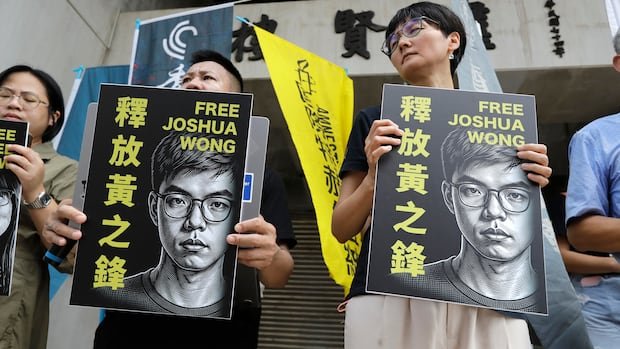

Joshua Wong, a prominent pro-democracy figure in Hong Kong, admitted guilt on Wednesday to conspiring with foreign forces to endanger national security under a law imposed by Beijing. This marks Wong’s second prosecution under the national security law, which was enacted in 2020 to suppress the city’s once-vibrant pro-democracy movement following widespread anti-government demonstrations in the previous year.
Appearing in court wearing a blue shirt, Wong looked thinner as he entered his plea. Supporters expressed encouragement, with a friend mentioning Wong’s activities like reading, studying, playing the guitar, and exercising while in prison. The hope is to see Wong released from prison soon for him to continue his work outside.
The current phase involves Wong awaiting sentencing, with the offense carrying a potential prison term of three to 10 years or even life imprisonment for severe cases. By pleading guilty, Wong may receive a reduced sentence. He was already serving a 4-year and 8-month term after pleading guilty in another national security case related to an unofficial political primary.
Critics view Wong’s legal troubles as an attempt to suppress dissent, but Beijing sees him as a supporter of Hong Kong independence, a stance considered unacceptable by authorities. Accused of collaborating with other activists to solicit foreign sanctions against Hong Kong and China in 2020, Wong gained prominence in 2012 as a student protesting national education policies and later as a key figure in the 2014 Occupy Movement.
Wong co-founded “Demosisto” in 2016, a political party that disbanded in response to the security law imposed in 2020. During the 2019 protests, Wong sought international backing for the democracy movement, which drew criticism from Beijing for alleged foreign interference. Following the law’s implementation, various activists, including media mogul Jimmy Lai, were jailed, while some fled to democratic nations like the U.S. and the U.K.
Hong Kong authorities have offered rewards for information leading to the arrests of exiled activists, such as Nathan Law, who now resides in the U.K. The continued crackdown on dissenters reflects Beijing’s firm stance on maintaining control over the region.