

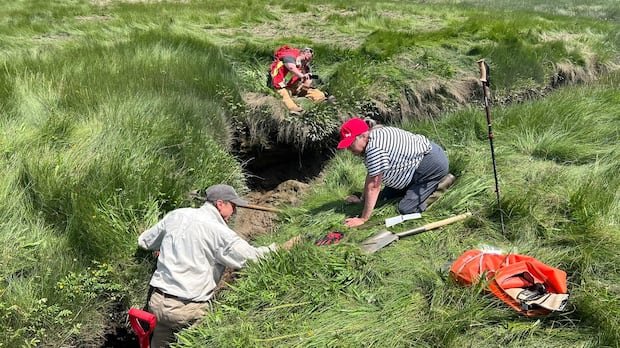

On the southwestern river of Nova Scotia, a historical detective is delving into forgotten remnants of North American history. Allains River, previously known as Lequille River, is a meandering tributary of the Annapolis River that stretches from the province’s interior to Annapolis Royal.
Around four centuries ago, the river housed one of the earliest industrial establishments post-colonization: a flour mill constructed in 1607 and later destroyed by fire in 1643. The mill’s exact location remained a mystery for ages until an amateur historian from the United States, along with a team of researchers and archaeologists, began unraveling the puzzle.
Mark Borton, a writer from Connecticut leading the hunt for the Poutrincourt gristmill, described the site as profoundly significant due to its historical importance. The necessity for the mill arose in 1605 when a fortified fur-trading post, named Port Royal by Samuel de Champlain, was established on the Annapolis Basin. Colonists required the mill to produce flour, as bread accounted for a substantial portion of the French diet at the time.
Champlain’s map from 1607 featured the Poutrincourt gristmill as a water-powered facility for grinding grain. Borton’s interest in tidal power and the Bay of Fundy led him to discover the mill’s significance during a visit to the Maritimes in 2018. By analyzing Champlain’s map alongside modern geographical features, Borton identified a potential site for the mill, leveraging tools like Google Maps to investigate further.
The quest to locate the mill faced challenges due to discrepancies in historical maps, but Borton’s innovative approach shed light on a new possible location. Collaborating with the Nova Scotia Museum, Borton acquired permits and collected samples for radiocarbon dating to solidify his theories.
The investigation also highlighted additional historic sites in the area, prompting Borton to advocate for their preservation. The project has brought together researchers, archaeologists, and Indigenous groups, emphasizing the shared landscape of Allains River and its significance in early interactions between European settlers and the Mi’kmaq people.
As Borton continues his exploration, supported by local institutions and experts, the uncovering of these historical sites serves as a valuable lesson in understanding and preserving the multicultural heritage of Nova Scotia.