

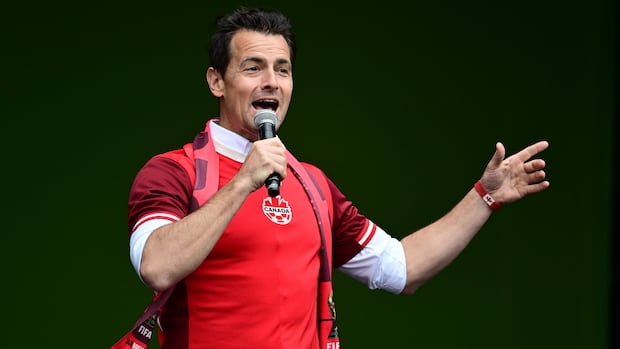

On Wednesday, Canada’s secretary of state for sport, Adam van Koeverden, dismissed worries that excluding Russian athletes from the upcoming world junior hockey championship in Alberta might negatively impact the nation’s prospects of hosting future international events, including the Olympics.
In response to inquiries about possible consequences, he stated, “No, we have been clear in our unwavering support for Ukraine and our demand that both Russia and Belarus refrain from participating in international competitions while representing their national symbols.”
His remarks coincided with the International Ice Hockey Federation (IIHF) reaffirming its stance against a recent ruling that mandated Russia’s return to international play, though it did not specifically address Canada’s ban on Russian players entering the country.
Prime Minister Mark Carney clarified Canada’s position on Tuesday during the Commonwealth Summit held in Antigua.
“If you are specifically inquiring about the world juniors, the Russians will not be participating,” he confirmed.
Last week, the Court of Arbitration for Sport ruled that Russia should be reinstated to compete internationally, starting with the world juniors, following their ban after the invasion of Ukraine in 2022.
Van Koeverden noted that he had met with Finland’s sports minister on Tuesday to discuss the matter, emphasizing that countries bordering Russia are experiencing different impacts due to the invasion.
“We share a lot of common ground, especially our support for Ukraine,” he expressed.
When questioned about why Russia is being treated differently than other nations, like the United States, van Koeverden highlighted Moscow’s exploitation of international sports for its political agenda.
“They consistently utilize sports for malicious intents and purposes, so there is no need for false equivalences in this context,” he stated.
In a statement released Wednesday, the IIHF mentioned logistical, security, and competitive challenges regarding Russia’s immediate return, including visa issues and potential alterations to tournament formats.
“The global repercussions of the decision made by the CAS Panel and the difficulties it poses for all parties involved were significantly underestimated,” the federation remarked.
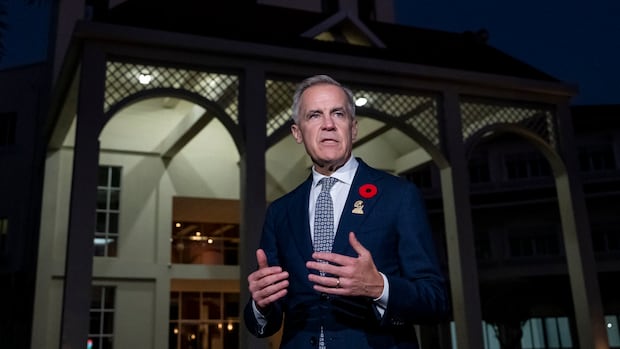
Prime Minister Mark Carney stated that while Russia and Belarus support ‘this illegal and unjustified war in Ukraine,’ no athlete from either nation will be permitted to compete in Canada, including at this winter’s World Junior Hockey Championship in Alberta.
IIHF consulting national hockey associations
Although the IIHF did not directly respond to Carney’s statement, it announced that it is consulting with national hockey associations, tournament organizers, and host authorities to determine its subsequent actions. The federation emphasized that the safety of players and the integrity of the tournament are of utmost importance and promised to provide further details in the upcoming days.
The federal government indicated it would utilize its immigration authority to block Russian and Belarusian athletes and officials from entering Canada to compete under their national flags.
Ottawa stated that this measure aims to prevent Russia and Belarus from leveraging international sporting events in Canada as avenues for political legitimacy and propaganda. However, athletes competing as neutrals might still be allowed to participate.
On Tuesday, Russia’s ambassador to Canada criticized the decision, claiming Ottawa was politicizing sports.
Oleg Stepanov remarked, “It is truly unfortunate to witness Prime Minister Carney’s administration intertwining politics with sports. Athletics, especially junior hockey, should focus on sporting excellence, fair competition, and uniting young people.”
He further suggested that this decision would remove some of Canada’s toughest competitors from the tournament.
“One might almost think that Ottawa has found a new strategy for winning international competitions: if there’s uncertainty in defeating your strongest rivals on the ice, just make sure they don’t reach the rink,” he commented.

Russia had been banned from international ice hockey competitions since 2022 following the invasion of Ukraine. The Court of Arbitration for Sport overturned International Ice Hockey Federation decisions, which excluded Russia from events in the 2026-27 season, including the men’s and women’s world championships. It is unclear how Russia will be included since adding another team will make for uneven groups and longer tournaments.
Hockey Canada welcomes Ottawa’s position
Hockey Canada expressed its support for the government’s stance on Tuesday and announced that its board of directors would convene this week to deliberate on future actions.
Canada’s decision followed similar announcements from several European hockey federations, including Sweden, Finland, Czechia, and Latvia, all of which stated they would not face Russia.
The opposition also extended to significant sponsors of the men’s world hockey championship, set to occur in Germany next May.
Czech automaker Skoda, a primary sponsor for over 30 years, announced on Wednesday that it would reconsider its involvement if Russia competes.
“Given the ongoing aggression from Russia, we find the return of the Russian national team to the world championship to be incompatible with the values we have consistently upheld,” the company stated in a communication to The Associated Press.
German workwear manufacturer Strauss also threatened to withdraw its sponsorship, while Nokian Tyres indicated it would cease its support if Russia participates.
The world junior championship is scheduled to commence on December 26 in Edmonton and Red Deer, Alberta, featuring defending champion Sweden among the ten teams that will compete.
The roster includes Canada, Czechia, Switzerland, the United States, Germany, Latvia, Slovakia, Norway, and Finland.