

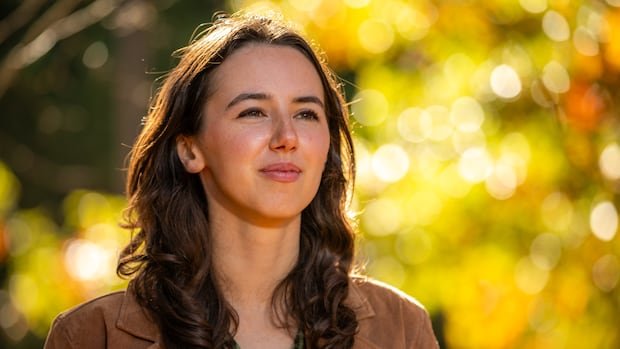

Amid her Grade 11 peers aboard a Via Rail train en route to Ottawa, Emily Lowan vividly recalls the deep distress that swept over her upon hearing the news of U.S. President Donald Trump’s initial election victory. For the 26-year-old leader of the B.C. Green Party, that moment marked her awakening to the severity of the climate crisis.
“I distinctly remember grappling with the choice of succumbing to despair and apathy or taking decisive action,” Lowan reflects.
Since then, she has dedicated a decade to activism, spearheading initiatives to mobilize young voters in the 2017 provincial election, orchestrating protests that prompted the University of Victoria to divest from fossil fuel entities, and campaigning against fossil fuel endeavors during her tenure at Climate Action Network Canada.
In a campaign reminiscent of New York’s progressive mayor Zohran Mamdani, Lowan clinched a historic victory last year, becoming one of the youngest individuals to assume leadership of a political party in Canada. Despite not holding a legislative seat, as the Greens maintained two, she has spent the past year crisscrossing the province to cultivate grassroots support.
Her provincial campaign was swiftly set into motion last month when NDP Leader David Eby called for a snap election, a move deemed by Lowan and other critics as political maneuvering, purportedly in response to the threat of U.S. tariffs.
Lowan’s aspiration is to secure a pivotal role in the government, contingent upon her winning a legislative seat.
“My call to voters is simple: while I may not ascend to premiership within a week, I aim for the B.C. Greens to uphold a minority government and hold the administration accountable,” she affirms.
Emphasizing that the Greens will impose specific conditions on any potential coalition, Lowan remains open to forging alliances, including with the B.C. Conservatives to form a government.
“No options are off the table,” she asserts.
Earlier this year, the B.C. Green Party’s renegotiations of its partnership agreement with the NDP faltered, citing the sidelining of numerous government commitments. Lowan accuses the nine-year NDP administration of betraying First Nations, reneging on climate pledges, and exacerbating affordability crises. While Eby has cautioned progressive voters about the risk of Conservative victories due to vote-splitting, Lowan contends that the NDP is simply evading accountability by shunning another working agreement with the Greens.
“The NDP claims fiscal constraints prevent funding for essential services like childcare, housing, and transit, but they haven’t explored all revenue avenues,” she rebuts.
The B.C. Green Party’s agenda includes ambitious plans to construct 26,000 affordable non-market homes annually, establish community health centers across all regions, and introduce a wealth tax targeting British Columbians with assets exceeding $50 million. Lowan estimates this initiative could yield $22.2 billion in the inaugural year, supplemented by subsequent levies on the wealthiest one percent of residents.
Former B.C. Green leader and current CentreBC candidate, Andrew Weaver, acknowledges Lowan’s acumen and talent but criticizes the feasibility of her platform, deeming it nearly impracticable. He questions her decision to contest the elections as a first-time leader, advocating for leadership transition from existing MLAs.
“Succeeding in an election remains unproven for Emily,” Weaver opines.
Lowan’s predecessor, Sonia Furstenau, lauds Lowan’s leadership, underscored by the party’s fielding of 73 candidates amidst the snap election.
“She embodies informed decision-making, clear values, and principles, amplifying voices historically marginalized in politics, not just youth but working-class individuals,” Furstenau praises.
Lowan’s campaign efforts have been focused on engaging constituents within the Saanich Peninsula and Gulf Islands, vying for a legislative seat previously occupied by former Green MLA Rob Botterell. Stories shared by residents grappling with affordability woes resonate with Lowan, reflecting her own upbringing in co-op housing supported by her single mother.
Raised on southern Vancouver Island, Lowan’s early years were marked by enthusiasm for tap dance and musical theater. During breaks from her campaign, she indulges in snorkeling along the Saanich Inlet beaches.
As the election unfolds, the B.C. Greens are poised to vie directly with the NDP for progressive voters, notes political science lecturer Sanjay Jeram from Simon Fraser University. Despite the recent election of Vancouver’s first Green mayor, Pete Fry, Jeram anticipates the Greens securing only one to three seats, attributing this to external factors and the prevailing political landscape.
Lowan remains optimistic about the potential impact of Greens holding the balance of power, eager to showcase her team’s capabilities.
“I urge British Columbians to vote for the change they desire, advocate for accountability, and believe in a brighter future for our province,” she concludes.