

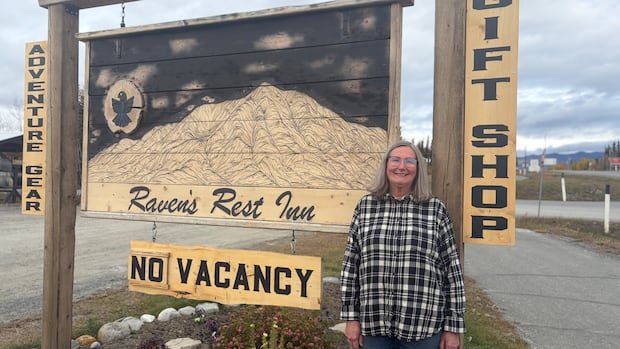

Haines Junction, located in Yukon, has been a favored rest stop for travelers on the Alaska Highway for a long time. Some tourism operators in the approximately 1,000-person community are observing a growing trend of visitors choosing Haines Junction and the adjacent Kluane region as a standalone destination rather than just a pit stop en route to or from Alaska.
The Yukon government reports that 69,418 vehicles traveled between Whitehorse and Haines Junction in the initial seven months of 2026, marking a 7.9% increase from pre-pandemic levels. However, border crossings into Alaska via the Beaver Creek port-of-entry, further up the Alaska Highway from Haines Junction, have yet to reach pre-pandemic levels, indicating a significant shift in travel patterns, as noted by a spokesperson from the tourism department.
The data primarily reflects vehicle counts and does not specifically track tourists or their length of stay. The visitor information center in Haines Junction saw 25,686 visits from January to August this year, compared to 21,070 visits during the same period in 2025, representing a nearly 21.9% increase. Nonetheless, some of this rise is attributed to the “early reactivation of door counters” this year, according to the tourism department.
Lynn Iler, the proprietor of Raven’s Rest Inn in Haines Junction, has noticed changes in booking patterns at her establishment. Iler mentions a transition from more one-night stays to an increasing number of travelers booking multi-night stays. Her inn promotes three-night stays and provides packages for four- and five-night stays for guests interested in hiking, canoeing, or kayaking in the area.
According to Iler, longer stays offer visitors a better opportunity to witness wildlife, savor local cuisine, and engage with the community. Isabelle Piché, who owns Adventure Time, a shuttle service between Whitehorse and Haines Junction, notes an uptick in customers traveling to Haines Junction over the three years of operation. The main draw for customers is hiking, with some opting for multi-day hikes lasting five to seven days, while others spend three to five days in Haines Junction utilizing local accommodations.
Piché started Adventure Time after observing individuals resorting to taxis due to the lack of public transportation or regular shuttles from Whitehorse, 155 kilometers away. She emphasizes that transportation remains a challenge in promoting tourism beyond Whitehorse and underscores efforts by the territorial government and the broader tourism industry to encourage longer stays outside the capital city.
Ben Ryan, chair of the Tourism Industry Association of the Yukon, highlights collaborative endeavors between businesses and the government to expand tourism activities across various regions of the territory and extend visitation beyond the peak months of July and August. He specifically mentions initiatives to establish destinations like Kluane as unique attractions distinct from the Whitehorse area.
Eduardo Lafforgue, the director of tourism for the Yukon government, emphasizes attracting “high-value” visitors who not only spend money but also stay longer and respect local communities and the environment. For Iler, the objective is not to rush visitors through the community but to encourage a slower pace, allowing travelers to fully immerse themselves in the local food, wildlife, and community interactions for a more enriching experience.