

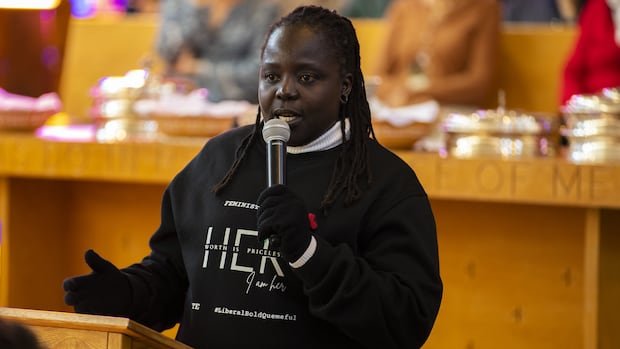

Pastor Caroline Omolo, a human rights advocate from Kenya, took part in a poignant Sisters in Spirit ceremony in Brandon, Manitoba, to honor Missing and Murdered Indigenous women, girls, and two-spirit people. Pastor Omolo, along with Zambian advocate Mwaka Mwandia, visited Winnipeg, Brandon, and Beausejour as part of the United Church Prairie to Pine Regional Council’s Faith Beyond Borders initiative.
Both advocates highlighted the ongoing struggle for human rights and safe spaces for 2SLGBTQ people, particularly in countries like Kenya where LGBTQ rights are restricted. Pastor Omolo emphasized the importance of creating spiritual connections for LGBTQ individuals who often face political and religious discrimination.
Collaborating with the United Church since 2024, Pastor Omolo stressed the significance of international partnerships to advance human rights globally. Visiting the Canadian Museum for Human Rights, they acknowledged the long-standing fight for 2SLGBTQ rights in Canada, emphasizing the shared queer history that drives the quest for inclusion and safe environments.
The initiative aims to unite international advocacy efforts and share experiences to combat fearmongering and violence against 2SLGBTQ communities. Laura Crookshanks, Knox United’s affirm committee chair, emphasized the interconnectedness of human rights struggles across borders and the importance of supporting such issues both locally and globally.
Advocate Mwaka Mwandia, from All Africa Theological Education by Extension, highlighted the need for theological education centered on gender diversity and institutional acceptance. Mwandia shared her experiences of creating safe spaces for LGBTQ individuals and the positive impact of incorporating LGBTQ perspectives into faith communities.
During their visit, both advocates learned from conversations with families affected by Missing and Murdered Indigenous women, emphasizing the power of dialogue in fostering healing and understanding. Pastor Omolo expressed the need to continue advocating for safe spaces and inclusivity, inspired by the diverse and affirming church communities in Canada.
The advocates aim to bring back the lessons learned from Canada to create similar affirming faith-based communities in their home countries, believing that fostering such spaces globally is a step towards greater inclusion and acceptance.