

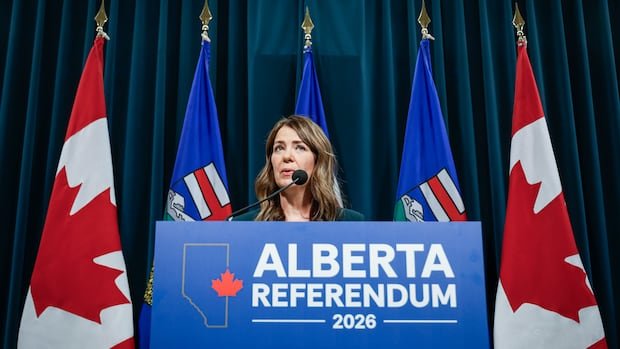

In Alberta’s upcoming referendum, the pro-unity faction is poised to triumph over separatists by a wide margin, according to recent polls. While the outcome seems clear for the unity side, the results are more uncertain for the other nine questions posed by Danielle Smith to voters. Smith, who has been vocal in supporting the “stay” option, has primarily emphasized immigration and constitutional reform questions in her campaign, backed by a $4 million government advertising effort.
Despite the significant government push, there has been limited public advocacy for Questions 1-9. On the contrary, a visible “No to the Nine” campaign has emerged, opposing Smith’s questions and gaining traction among federalist supporters. Smith’s intent was for these questions to garner widespread support, but they have faced criticism and indifference from anti-separatist factions and notable separatists alike.
The questions were formulated based on popular ideas from the Alberta Next panel in 2025, aiming to secure majority backing. However, concerns have arisen within Smith’s United Conservative Party about potential rejection of some or all questions by voters. The debates surrounding the referendum have intensified, with prominent figures expressing varying views on the significance of the questions at hand.
While Smith’s administration has invested heavily in promotional efforts, including TV ads and billboards, the opposition to the nine questions has mobilized with limited support for them. The expenditure on these campaigns surpasses the combined fundraising by pro- and anti-independence groups. The lack of unified endorsement for the questions highlights the division among conservative Albertans on these issues.
As the referendum date approaches, diverse voices continue to express contrasting opinions on the implications of the questions, particularly those related to immigration policies and constitutional amendments. The public discourse reflects a deepening polarization over the referendum topics, with key figures advocating for different stances on the ballot questions.
The uncertainty surrounding the level of public support for the nine questions underscores the complexity of the referendum landscape. Recent polls have shown mixed sentiments among Albertans, with varying degrees of agreement and disagreement on the proposed measures. The divergent views and lack of consensus suggest a challenging electoral environment as the referendum draws near.