

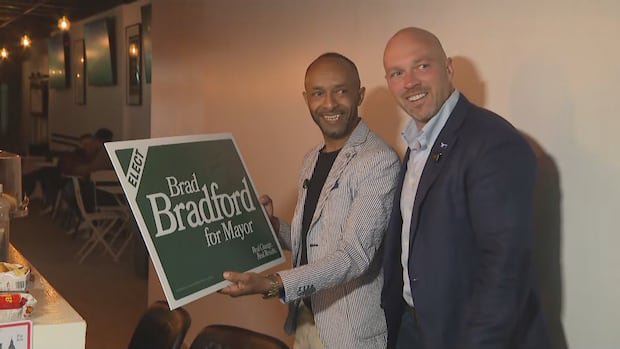

With the Toronto mayoral election approaching in less than a month, Brad Bradford has revealed several financial commitments totaling hundreds of millions of dollars. These include a promise to reduce the land transfer tax on the initial $1.1 million of all properties, a proposal to restructure the city’s water services into a new corporation, and a strategy to rely more on borrowing. Critics have raised concerns about the feasibility of Bradford’s plans, labeling them as unfunded promises.
Incumbent Olivia Chow’s campaign criticized Bradford’s debt strategy, accusing him of risking taxpayers’ money by keeping details of potential service cuts and future debts undisclosed. In response, Bradford defended his approach, likening it to how higher levels of government handle budgeting by borrowing for long-term infrastructure investments.
The proposed financial shift would mark a significant departure from Toronto’s traditional financial planning methods, as explained by Peter Weltman, the former financial accountability officer of Ontario. The plan involves increasing the city’s debt load to fund current expenses and redirecting funds from property taxes away from long-term savings towards immediate expenditures.
Bradford’s campaign emphasizes a new budgeting philosophy for municipalities, highlighting the need for innovative financial strategies to create a safer and more affordable city. The proposal faces regulatory constraints restricting the amount of debt municipalities in Ontario can carry, with Toronto aiming to maintain a debt service ratio below 15% annually to safeguard its credit rating and borrowing capacity.
A key aspect of Bradford’s plan is to establish a separate public utility company to manage Toronto’s water services, enabling the city to transfer debt off its balance sheet to facilitate borrowing for other projects. However, critics question the financial viability of the proposal, raising doubts about the projected profits and the potential impact on the city’s finances.
Despite the criticism, Bradford remains steadfast in his vision, arguing that the city’s approach to infrastructure funding needs a paradigm shift. He aims to implement a strategy that mirrors federal budgeting practices, allocating a significant portion of debt to finance new infrastructure projects while ensuring immediate affordability for residents and businesses. However, concerns persist over the city’s revenue-generating capabilities compared to higher levels of government.
As the mayoral campaign intensifies towards the final stretch, Bradford’s focus on financial proposals has drawn attention to his platform, contrasting with Chow’s campaign that has shifted towards highlighting her past accomplishments. With advanced voting starting on October 6 and election day set for October 26, the mayoral race continues to evolve amidst the diverse range of candidates vying for the position.