


President Donald Trump announced on Tuesday that the United States currently has no planned discussions with Iran and there are no scheduled talks in the near future. This statement came as Iran’s chief negotiator mentioned that the Strait of Hormuz would remain closed until the U.S. fulfills the terms of an interim agreement signed in June.
The memorandum of understanding from June outlined a cessation of all military activities and set a 60-day deadline for reaching a permanent resolution to end the conflict and address the ongoing disagreement regarding Iran’s nuclear program. However, this deadline passed on Monday without a final agreement.
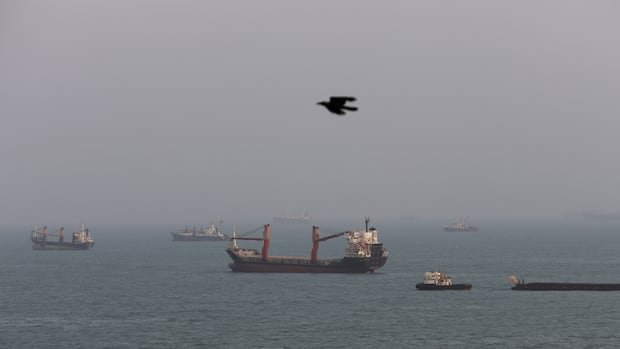
Divergent statements emerged from both sides on Tuesday, with Trump asserting on the Truth Social platform that the strait was functioning normally, claiming that all Iranian mines in the area had been either removed or detonated. Nevertheless, commercial traffic in the Strait of Hormuz has significantly decreased compared to pre-war levels following military actions by the U.S. and Israel on Iran starting February 28.
In a separate instance, Trump shared a fabricated map depicting the Strait of Hormuz as “New U.S. Territory.” Subsequently, the U.S. reenacted a naval blockade initially imposed in April, which limited shipping to and from Iranian ports starting in mid-July.
Iran’s parliamentary Speaker and former negotiator in talks with the U.S., Mohammad Bagher Qalibaf, reiterated Tehran’s stance on Tuesday, emphasizing that the Strait of Hormuz will remain closed until Washington fulfills its commitments under the agreement, including lifting the blockade, releasing frozen assets, and ending oil sanctions and military threats.
The June memorandum aimed to reopen the Strait of Hormuz with Iran playing a role in facilitating traffic, potentially leading to the imposition of fees after the 60-day period. Subsequently, Iran asserted control over the waterway, critical for global oil and gas supplies.
Accusations of violations arose swiftly between the two parties following the June pact, with Iran targeting vessels near Oman’s coast and the U.S. launching strikes within Iran. In response, Tehran deployed drones against Arab nations hosting American troops like Jordan, Kuwait, and Bahrain. The U.S. revoked waivers allowing Iran to export oil and reinstated a port blockade.
Refusing Iran’s demands, Trump contended that Tehran should pay reparations for the conflict, stating that the U.S. controls the strait and aiming to exert economic pressure through sanctions and the blockade.
On Tuesday, a ship was hit by a projectile as it exited the Strait of Hormuz, according to the UK Maritime Trade Operations center. This event underscores the risks of navigating the strait amid Iran’s control of shipping traffic, as negotiations with Oman progress to manage this vital passage for global energy supplies.