

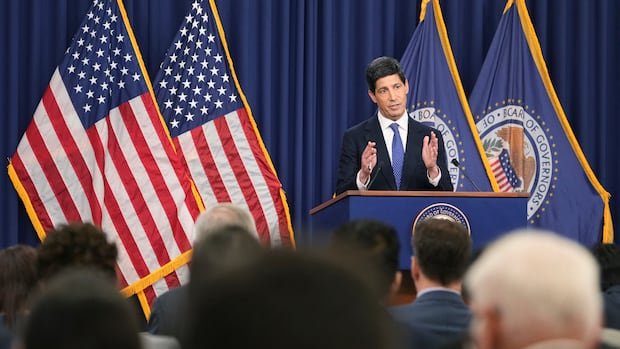

The U.S. Federal Reserve implemented its first interest rate hike since 2023 on Wednesday to combat persistently high inflation. This quarter-point increase brings the Fed’s key rate to approximately 3.9 per cent, potentially leading to increased borrowing expenses for American mortgages, auto loans, and credit cards over time. The decision comes amidst Americans grappling with elevated costs for essential items like groceries, gas, and housing, with affordability emerging as a prominent concern in the upcoming midterm elections.
Furthermore, the Fed indicated in its quarterly projections that another rate hike may take place later in the year, raising rates to 4.1 per cent. Fed Chair Kevin Warsh, appointed by U.S. President Donald Trump, highlighted the economy’s acceleration since the last rate decision in late July. Emphasizing the prolonged high inflation, Warsh stressed the urgency to address the issue.
The Fed’s unanimous support for the rate hike aimed to expedite a return to the targeted two per cent inflation rate. Warsh cited escalating tensions between the U.S. and Iran, driving up gas prices, as a key factor influencing the decision. Committed to curbing inflation, Warsh emphasized the Fed’s data-driven approach to assess the inflation trajectory.
While Warsh’s stance on rate adjustments has shifted, the recent rate hike underscores the Fed’s dedication to managing inflation. Despite previous suggestions of rate reduction, Warsh’s current focus remains on addressing inflation concerns. President Trump expressed continued confidence in Warsh while criticizing the Fed’s actions, citing the board’s alleged political motivations and maintaining that interest rates are excessively high.
The ongoing impact of the Iran conflict on gas prices presents a challenge to controlling inflation, with recent reports showing an uptick in core prices in August. Meanwhile, robust retail sales in August indicate sustained consumer spending, suggesting that current interest rates may not be hampering economic activity enough to subdue inflation.
In contrast, economists suggest that the rate hike in the U.S. does not necessarily foreshadow similar actions by the Bank of Canada. Canada faces its own inflationary pressures due to rising energy costs linked to the Iran war, with inflation holding steady at three per cent in August, exceeding the Bank of Canada’s target. However, compared to the U.S., Canada’s inflation situation is relatively milder. The differing economic conditions between the two countries imply that Canada is not under the same urgency to raise interest rates as the U.S. Analysts foresee the U.S. proceeding with additional rate hikes, while the Bank of Canada is not expected to raise rates until 2027.