

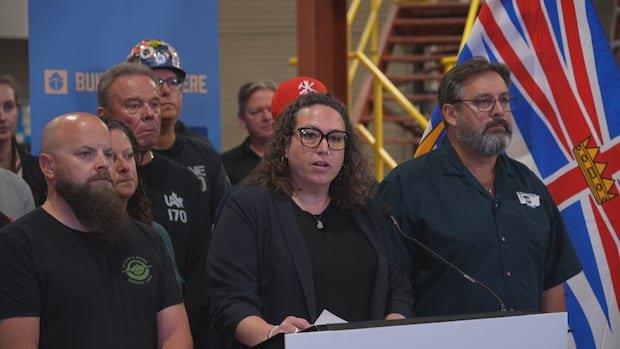

This summer, various regions in British Columbia have experienced significant drought conditions.
In Bessette Creek, the extreme drought has led to restrictions on water usage to safeguard salmon populations affected by historically low water flows.
Temporary protective measures for the Salmon River watershed were enacted at the end of July, lifted in early August due to a heightened wildfire threat, and then reinstated at the end of August.
These are merely a few watersheds that have necessitated government action.
Bob Crandall serves as the treasurer for the Cowichan Lake Salmonid Enhancement Society located on Vancouver Island.
This organization oversees 16 streams linked to Lake Cowichan, and Crandall notes that these streams are becoming increasingly arid each year.
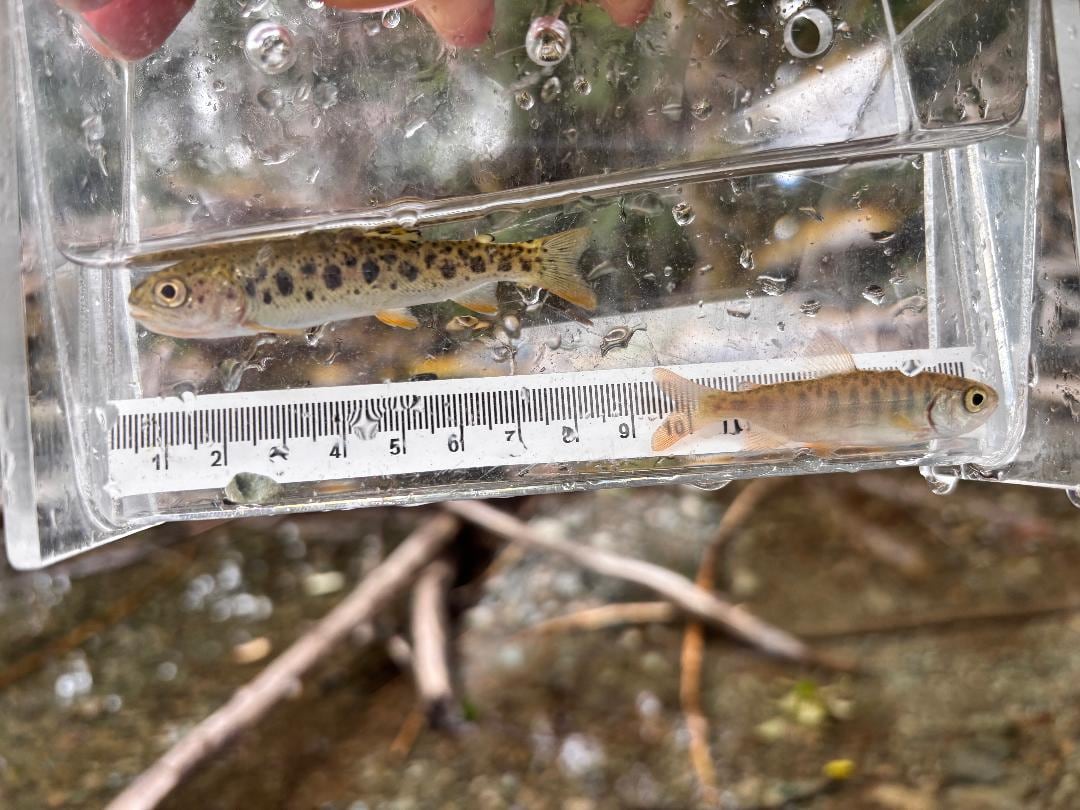
To assist, the society engages in what they refer to as fry salvage — the manual relocation of fish from parched rivers to other bodies of water.
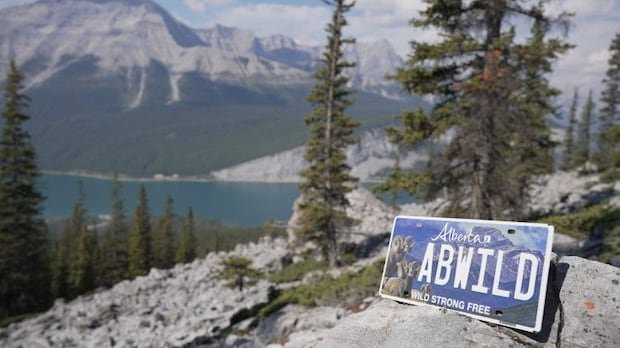
“If human actions have contributed to these ecosystem challenges, then it is our responsibility to intervene and improve the situation,” Crandall stated, who has been involved in these efforts for over 16 years.
While communities in B.C. are embracing this intervention as one of the few available options, scientists caution that this approach has limitations and may not serve as a viable long-term solution.
Fish Relocation Efforts
Alongside the Ts’uubaa-asatx Nation and numerous volunteers, Crandall collaborates to gather fish — primarily salmon, trout, and char — and transport them to areas with better water availability.
However, this task is becoming increasingly challenging due to climate change. The society, which has been conducting fry salvage operations since 1984, has observed that sections of rivers and streams now dry up more extensively over the summer months.
“We’ve noticed that streams are drying up further upstream,” he explained.
“Now, it feels like we are traveling five, six, or seven kilometers upstream — it requires significantly more effort.”

The procedure incorporates aerators and bubblers to provide sufficient oxygen for the fish, along with nets for transportation. Crandall mentions that carrying 23 kilograms (50 pounds) of water, fish, and gear over rocky, dry riverbeds can be quite demanding in hot weather.
Having been born in a rainbow trout hatchery, he has been surrounded by fish throughout his life, and he believes it is crucial for them to remain within the ecosystem rather than simply perish.
“It’s possible to rescue up to 100,000 or 150,000 fish during a drought summer,” he remarked.
Significance of Fish
The Ts’uubaa-asatx Nation plays a vital role in the fry salvage initiatives. Its members assist in relocating the fish and utilize drones to identify areas where streams are drying up.
Crandall described the Nation as the Society’s most valuable partner, asserting that many efforts would not be feasible without their support.
“It requires a collective effort,” noted Aaron Hamilton, the Nation’s operations manager.
Hamilton mentioned that conditions have become more unpredictable, as weather patterns can swing from extreme heat to sudden heavy rainfall.
Michelle Corfield, the lands and resource director and negotiator for Ts’uubaa-asatx, stated that salmon are an essential resource for the community. She emphasized the importance of recovery projects for the Nation, which has also allocated its own funds for these endeavors.
“Salmon are integral to our identity,” she affirmed. “It is our responsibility to ensure their survival for both today and future generations.”
Corfield added that the Nation adopts a comprehensive approach to salmon conservation, focusing on river restoration and ocean conditions instead of concentrating solely on individual fish.
Fry Salvage Challenges
Similar rescue efforts are experiencing constraints elsewhere due to worsening drought and extreme heat.
This year’s drought has been particularly severe in France, where Jean-Pierre Faure of the Fédération de Pêche du Rhône reported that relocating fish is no longer effective.
Faure indicated that several weather phenomena have occurred that would typically be expected only once every 50 to 100 years.
“The most recent event this summer has been the worst we’ve ever encountered,” he stated. He added that France’s management strategies are inadequate for adapting to these changing conditions, as they rely on historical data to inform future plans — a strategy he believes is outdated.
“It began very early at the end of May, and since then, we have experienced four or five significant heatwaves, reaching unprecedented temperatures.”

With river flows decreasing significantly, fish have been forced into limited water pockets, escalating competition for resources and leading to higher mortality rates.
Faure explained that fish endure physiological stress and deplete energy reserves when water temperatures exceed 18 or 19 degrees Celsius. Juvenile fish are particularly vulnerable due to their lower energy reserves, and temperatures surpassing 25 degrees Celsius can be lethal within hours.
“This summer, the combined impacts of climate change and thermal discharge from the nuclear power sector have caused the Rhône River’s average temperature to reach 25 degrees for over two months,” Faure noted.
“This situation persists; it remains ongoing. Such conditions have never been witnessed before.”
He emphasized that rather than focusing on immediate solutions like rescue fishing, the emphasis should be on restoring ecosystems and managing water use effectively.
Moving fish can create additional stress, cause injuries, or spread diseases, he cautioned. The operation can also incur costs ranging from 1,000 to 2,000 euros daily for each kilometer addressed.
“When dealing with thousands of kilometers of drying rivers, it is impractical to implement this on a large scale.”
Moreover, when up to 90 percent of the watershed is dry, there may simply be no viable locations to relocate the fish.